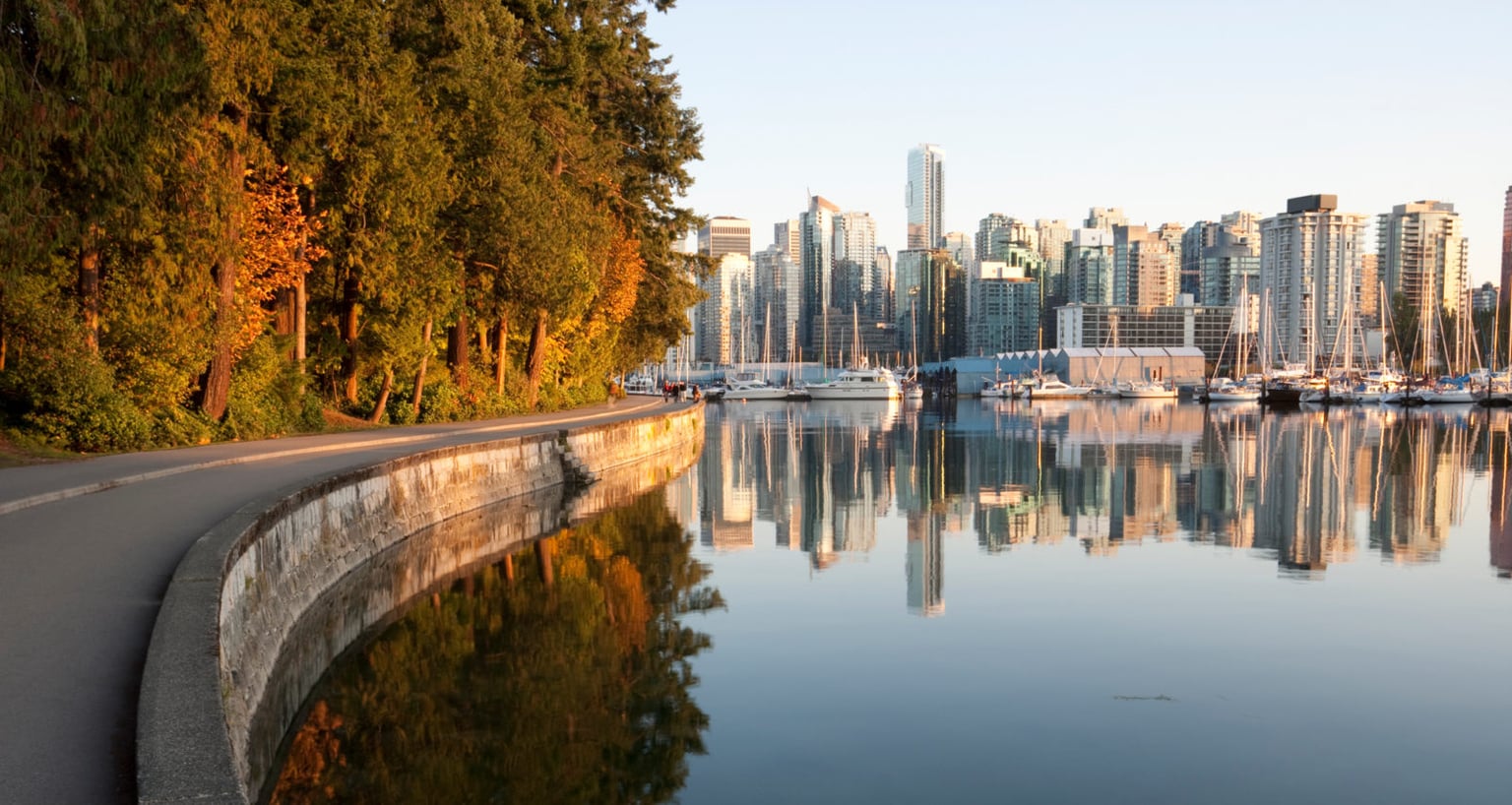
British Columbia quietly became the largest venture market in Canada, and most founders outside the province still haven't caught up. In 2025, BC pulled in $2.4 billion CAD in venture capital across 71 deals, capturing roughly 31% of national VC while representing about 16% of deal volume. Translation: the companies being built here are getting bigger checks from more serious investors than anywhere else in the country.
With 9,400+ tech companies and over 200,000 tech workers, BC is no longer emerging. It's a mature ecosystem with real exits, real capital, and real gaps. If you're building here in 2026, the playbook has changed since Slack sold, and knowing the current version matters.
Here's what actually works in BC right now, from SR&ED at the new $4.5M ceiling to which accelerators still write checks that matter.
The exits that built the credibility
Any honest conversation about BC starts with the exits, because that's what tells investors this geography produces fundable and acquirable companies.
Stewart Butterfield grew up in Lund, a fishing village on the Sunshine Coast. He built Flickr (Yahoo bought it for $25M in 2005), then Slack (Salesforce bought it for $28B in 2021). That single trajectory reshaped how Vancouver thinks about ambition.
Clio, founded by Jack Newton and Rian Gauvreau in 2008, raised its $900M round in 2024 at a $3B valuation and is now tracking toward a public offering conversation in 2026. Hootsuite crossed $400M in revenue before its recapitalization. Thinkific went public on the TSX at $1.25B. Unbounce hit $50M+ in revenue bootstrapped from a Vancouver apartment. Dapper Labs, the team behind NBA Top Shot, still headquarters in Vancouver despite the crypto winter shakeout. STEMCELL Technologies now employs 2,700 people and clears $580M in revenue.
These aren't lucky one-offs. They're the compounding output of an ecosystem that's been quietly building for 20 years.
The structural edges founders keep underestimating
The timezone argument matters more than founders admit. Pacific Time puts you in the same working hours as your Silicon Valley investors, customers, and design partners. If you've ever tried to run a Series A process from Toronto with a lead in Menlo Park, you already know what a three-hour delta does to deal velocity.
BC also sits on the Asia-Pacific corridor. Direct flights to Tokyo, Seoul, Singapore, and Sydney open commercial opportunities that Eastern Canadian founders have to route through LAX to reach.
Then there's talent. UBC pulled in $972M in research funding for the 2025-26 cycle. SFU and UVic add another $400M+ combined. The BC PNP Tech pathway now runs weekly draws across 32 eligible occupations with a two-to-three month processing timeline, which is faster than Ontario's equivalent stream. Combined with the Canada Startup Visa, founders here have hiring tools most provinces can't match.
Compensation still runs 25-35% below Bay Area rates for senior engineers as of Q2 2026. A staff engineer in Vancouver costs around $210K CAD all-in versus $340K USD in San Francisco. That gap extends runway without dropping quality.
Where the money actually comes from
The $2.4B raised in 2025 came from a mix of local funds and cross-border capital. The established BC names still writing checks: Yaletown Partners (founded 2002), Vanedge Capital (2010), Rhino Ventures, Version One, and Pender Ventures. Kensington Capital Partners manages the $101M BC Tech Fund, a government-backed vehicle targeting the province.
At the earliest stages, the accelerators still matter. Launch Academy has supported 6,400+ founders whose companies have collectively raised $2.7B. New Ventures BC has run for 25 years and helped alumni raise over $900M. CDL-Vancouver operates deep tech, climate, and AI streams. For cleantech, Foresight remains Canada's largest accelerator with $2.4B deployed and 30,000+ industry connections. BC led the country in cleantech deal count again in 2025 with 18 transactions.
The gap? Series B and beyond. Most BC companies raising $30M+ rounds still bring in a US lead. If you're planning a growth round, start building those relationships early. Our guide on Canadian founders and US investors walks through the mechanics, and if you're weighing structure changes, the Delaware flip breakdown covers what actually happens.
Tax credits and grants that move real dollars
Canada's SR&ED program is the single most valuable government incentive available to BC startups, and most first-time founders leave money on the table. As of the 2025 federal budget implementation, the refundable credit rate stayed at 35% on qualifying R&D expenditures, but the expenditure ceiling rose to $4.5M for private CCPCs (up from $3M). That change is worth an extra $525K in refundable credits per year for R&D-heavy companies.
SR&ED stacks with IRAP grants (still writing $50K to $10M+ tickets in 2026) and Innovate BC programs, which relaunched the Ignite fund in early 2026 with $30M earmarked for natural resources and life sciences. A well-structured BC startup can layer these to get 40-60% of R&D costs subsidized in the pre-revenue phase.
On the talent side, the BC PNP Tech stream has been permanent since 2021 and processes weekly. If you're hiring internationally and planning around it, factor 10-14 weeks from job offer to work permit, not the six months you'd budget under federal Express Entry alone. For a broader comparison of provincial tradeoffs, see best province for Canadian founders.
Sectors where BC punches above its weight
Three verticals are genuinely world-class here, not just regionally strong.
Life sciences is anchored by UBC's research output and Vancouver's clustering around Great Northern Way. The province has 2,100+ life sciences companies employing 22,000 people. AbCellera's IPO in 2020, STEMCELL's continued growth, and the recent $180M Series C for Notch Therapeutics show the ceiling.
Cleantech benefits from BC's clean energy grid (98% hydro), a regulatory environment that actually rewards emissions reduction, and Foresight's purpose-built scaling infrastructure. Svante, General Fusion, and Moment Energy all sit in the Lower Mainland.
AI and enterprise software remain the largest category by deal count. Vancouver's AI cluster around the Vector Institute's western partners and companies like Ada, Later, and Jane has produced steady deal flow. If AI is your space, the 2026 Canadian AI startup landscape is worth reading before you plan your raise.
What the ecosystem still lacks
No honest read on BC ignores the gaps.
Late-stage capital is thin. The 71 deals that made up 2025's $2.4B were heavily skewed by five rounds over $100M each. Take those out and the median BC Series B looks a lot smaller than the Toronto equivalent. Companies raising growth rounds still fly to New York, Boston, or the Bay.
Housing remains brutal. Vancouver ranks in the top three least-affordable cities globally, which affects both founder quality of life and the ability to recruit senior talent from Toronto or the US. Kelowna and Victoria have absorbed real migration from founders wanting BC's ecosystem without the $2.4M starter home.
The repeat-founder density is still building. San Francisco has a compounding advantage from decades of exits producing angels who become mentors who become investors. BC has that layer now, but it's thinner. The Slack, Hootsuite, and Clio alumni are starting to write checks and take board seats, but the informal knowledge transfer that accelerates a first-time founder still happens slower here than in the Valley.
How founders actually break in
The founders who build real networks in BC do it through consistent, deliberate relationship-building, not event attendance. The ecosystem is large enough to have depth but small enough that the same few hundred people show up repeatedly as co-investors, advisors, customers, and hires. Getting into that orbit matters more than any single pitch competition.
Felix Böck started ChopValue in 2016 with $200 and a chopstick recycling idea. He now runs a franchise operation on three continents. His public credit for the scale: Vancouver's willingness to back an unconventional bet. That openness to real differentiation, more than category familiarity, is what BC founder culture actually rewards.
If you're building here and want a seat at the table with founders working through the same problems, Founder Feast runs dinners every other Thursday at 7pm in Vancouver, San Francisco and Los Angeles. Five founders, one restaurant, no pitching. Just the kind of conversation that compounds. Apply for a seat and we'll match you with four founders worth your Thursday.