Most founders hate networking. Not the relationships part. The format. Standing in a hotel lobby with a lanyard, swapping decks with a stranger who's already scanning the room for someone more useful.
The founders who actually build great networks in 2026 don't do any of that. They've quietly opted out of the conference circuit and replaced it with small dinners, weekly walks, and group chats with 6 other operators. Their "network" looks more like a friend group than a Rolodex, and that's exactly why it works.
Here's how to build that kind of network without faking your way through another mixer.
Stop pitching. Start asking better questions.
The fastest way to make a conversation feel transactional is to lead with what you do. The person across from you knows the script. They're already mentally drafting their own pitch in response. Nothing useful gets said.
Try this instead. Open with a real question about them. Not "what do you do" but "what are you spending most of your time on this month?" or "what's the part of the business you're avoiding right now?" Founders love answering the second one because nobody ever asks it.
I sat next to a Series A founder at a dinner last March who told me his cap table was a disaster and he didn't know who to call. I introduced him to a corporate lawyer the next morning. He's now one of my closest founder friends. That entire relationship started because I didn't ask what his company did for the first 40 minutes.
Curiosity is the cheat code. If you're genuinely interested in the other person's problem, you'll find a way to help, and helping is what builds real network density. For more on this, see our breakdown of how Founder Feast connections actually work.
Pick formats designed for real conversation
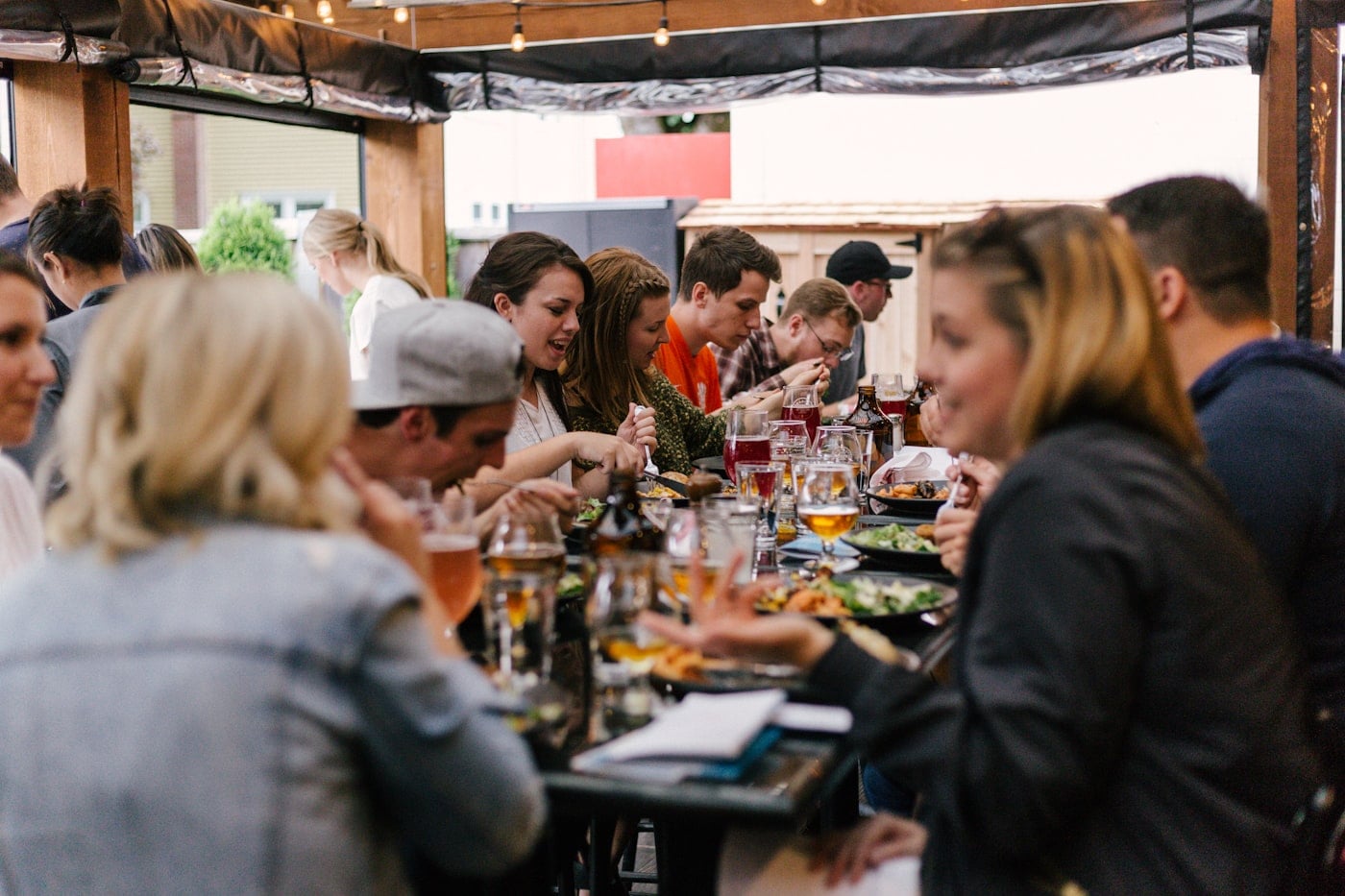
Not every networking format produces the same return. After running founder dinners in three cities, the pattern is obvious. The formats that build real relationships have three things in common: small groups (5 to 8 people), a shared activity that gives your hands something to do, and at least 90 minutes of unstructured time.
What works:
- Dinners with 4 to 6 founders
- Small group hikes or runs
- Co-working days at a shared studio
- Founder houses and weekend retreats
What doesn't:
- Conference happy hours with 200 people
- Speed networking events
- Panel discussions where you sit and listen
- Demo nights where everyone is performing
We wrote a longer comparison of Founder Feast vs traditional networking events if you want the full breakdown. The TL;DR: the smaller the group and the longer the format, the higher the chance you'll actually remember the conversation in six months.
Follow up with something useful, not "let's grab coffee"
The follow-up is where 90% of networking dies. "Great meeting you, let's grab coffee" is the polite version of "I will never contact you again." Both of you know it.
A useful follow-up has one of three things in it: an intro, a resource, or a specific question that requires their expertise. "Hey, you mentioned you were figuring out US incorporation. I just read this on the Delaware flip for Canadian founders, thought of you" is worth 50x more than "let's catch up."
The bar is low because most people don't do this. Send three useful follow-ups a week and within six months you'll have a network of people who actually pick up when you call. The reason it works is simple: you're showing you listened, and you're giving before asking. That's it. That's the whole game.
Build a regular practice, not a panic plan
Most founders network in two modes: ignoring it entirely, or scrambling when they need to raise. Both are bad. The first one means you have no warm intros when it matters. The second one is too obvious, and investors can smell it.
The founders with the strongest networks treat relationship-building like a workout schedule. One dinner a week. One coffee every two weeks. One longer trip per quarter to whatever city has the most relevant people. Boring. Consistent. Compounds.
If you're in Vancouver, the local scene has tightened up considerably in 2026. There's a real founder community now centered around Gastown, Mount Pleasant, and Kits. Check our guides on Vancouver entrepreneur networking and Vancouver startup events for 2026 if you want a starting map. In Toronto, the King West and Liberty Village crowds are easier to break into than people think. Start with our Toronto founder restaurants list and pick a regular spot.
The point is, pick a cadence and stick to it. The person you had dinner with once is a contact. The person you've had dinner with quarterly for two years is the one who calls you when their friend is hiring a CTO.
Stop optimizing for "useful" people
This one is counterintuitive. Most networking advice tells you to target. Find the VCs. Find the unicorn founders. Find the people who can move the needle.
In practice, the highest-ROI relationships I've seen come from peers, not power players. The seed-stage founder you meet today is the Series B founder writing your reference call in three years. The technical co-founder who can't find product-market fit might be the operator who joins your team after a pivot. Networks compound through peers, not through chasing up.
The other reason: people at the top of the food chain get pitched constantly. You're noise. But peer-to-peer relationships are real because the dynamic is balanced. You're both figuring it out. You're both helpful and useful to each other in ways that aren't obvious yet.
If you're early and trying to build a foundation, focus on other early founders. Co-working spaces, finding a co-founder in Canada, small dinners, and informal Slack groups will get you further than crashing a VC event.
Show up even when you don't want to
The hardest part of networking isn't the conversation. It's the calendar. Most founders cancel the dinner on Thursday because the launch is Friday. They skip the coffee because Tuesday got busy. They tell themselves they'll do it next month.
Next month never happens. The founders who build great networks are the ones who treat social commitments like investor meetings. You don't no-show your lead investor. Don't no-show the founder who blocked off two hours for you.
There's a 90% rule worth adopting: show up to 9 out of every 10 things you commit to, even when you're tired, even when the week is on fire. The compounding effect of being someone who actually shows up is enormous. People remember.
Common questions
How often should I be networking as an early-stage founder? One real interaction per week is the floor. That's one dinner, one coffee, or one founder call. More than three a week and you're not building anything, you're just busy.
Should I go to conferences in 2026? Only if you're already meeting specific people there. Conferences are great accelerators for existing relationships and terrible for starting new ones. Set 5 meetings before you book the flight, or skip it.
What if I'm introverted? Small group formats are designed for you. A 5-person dinner is a totally different experience from a 200-person mixer. You don't need to be the loudest person at a table of 5 to get value. You just need to ask good questions and listen.
How do I get into closed founder communities? Get introduced by someone already inside. The best communities don't accept cold applications, they grow through trust. Start by being useful to one or two well-connected founders and the invites follow.
Try a different format
If you've read this far, you're probably already done with the conference circuit. Founder Feast curates Thursday night dinners for 5 founders at top restaurants in Vancouver, San Francisco and Los Angeles. No name tags. No pitching at the table. Just 4 other founders who get what your week looks like.
Membership is $39.99 a month (CAD in Vancouver, USD in San Francisco and Los Angeles) and covers every dinner you book; you pay the restaurant for your meal. Apply here and a person reads it.