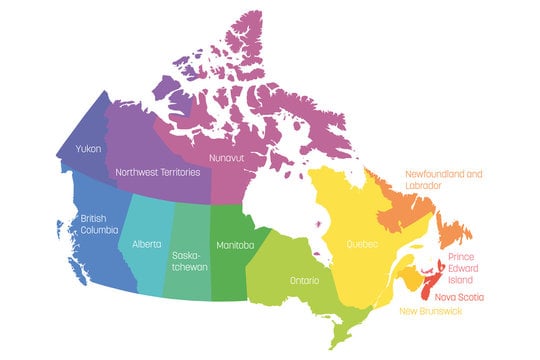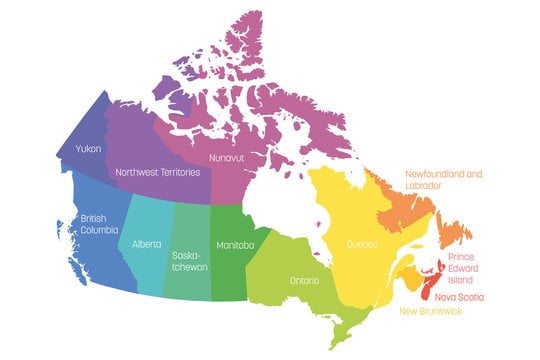
Canada ranked 5th globally in the Startup Genome's 2025 ecosystem index. Venture capital hit $8.5 billion CAD across 592 deals last year. The country has 1.4 million tech workers. Impressive numbers, but they flatten a reality that founders need to understand before they file their articles of incorporation. Which province you choose shapes your funding access, your hiring pool, your tax bill, and the quality of founders you'll end up having dinner with.
This is not a "it depends on your situation" answer. It is a direct breakdown of what each major province actually offers in 2026, with numbers attached.
The short answer, by startup type:
- Ontario if you need the deepest capital and enterprise customers: fintech, enterprise SaaS, AI commercialisation, and anyone hiring fifty-plus engineers in year two.
- British Columbia if your investors or customers are on the US west coast or in Asia-Pacific: cleantech, B2B SaaS, and founders who want a tighter, higher-quality founder pool.
- Quebec if you are research-heavy and capital-efficient: AI and machine learning companies where payroll savings go straight to runway.
- Alberta if tax efficiency drives the model: profitable or near-profitable companies, cleantech and energy tech, at the lowest combined corporate rate in Canada.
- Atlantic Canada if you are early, cost-sensitive and in ocean or environmental technology.
The sections below carry the numbers behind each verdict.
Ontario: The Scale Play
Ontario absorbed $2.5 billion across 252 deals last year, more than any other province by a significant margin. The Toronto-Waterloo corridor sits at 20th globally in Startup Genome's rankings, a slight slide from 18th but still the dominant Canadian tech corridor by every measurable metric. Toronto alone houses over 414,000 tech workers, and the province as a whole counts 689,600.
The fintech story in Ontario is particularly strong. Toronto is the number one fintech ecosystem in Canada, home to Wealthsimple and with Shopify headquartered just down the 417 in Ottawa. If you are building in financial technology, insurtech, or anything adjacent, the customer access and talent pipeline here are unmatched nationally. The AI infrastructure is also serious: 130-plus AI companies, 8 research centers, and 26 active labs. The Toronto tech talent pool grew 29% between 2017 and 2022; Waterloo grew 52% in the same window, driven largely by the University of Waterloo co-op pipeline.
The weakness is straightforward: cost. Office space, engineer salaries, and founder cost of living in Toronto have all increased faster than the ecosystem ranking. You are paying Bay Area adjacency prices without Bay Area deal volume. If capital efficiency matters to your model, and it should, factor that in before signing a King West lease.
Best for: Fintech, enterprise SaaS, AI research commercialization, founders who need to hire 50-plus engineers in year two.
British Columbia: The Quality Over Quantity Play
BC raised $2.4 billion in 2024 across just 88 deals, which tells you something important. That works out to a record average deal size of $27.9 million. Vancouver sits at 36th globally, but the distribution of capital here is heavily skewed by a small number of large outcomes. Clio's $1.24 billion raise alone represented roughly half of the province's total venture funding. Strip that out and the picture looks considerably thinner.
That said, the structural advantages of BC are real. The Pacific time zone aligns you with San Francisco naturally: your morning standup happens before the US west coast eats breakfast, and you can realistically meet investors in person in a two-hour flight. The Asia-Pacific gateway argument is compelling for founders targeting markets in Japan, South Korea, or Southeast Asia. BC also leads Canada in cleantech deal flow, with 15 dedicated deals last year and a growing infrastructure of environmental tech companies.
The BC Provincial Nominee Program Tech pathway deserves a specific mention for founders hiring internationally. It is one of the faster immigration routes in the country for skilled tech workers, which matters when you're competing for talent against companies that can offer US visa sponsorship.
Best for: Cleantech, B2B SaaS, founders with existing US west coast investor relationships, companies targeting Asia-Pacific markets.
Quebec: The Research and Cost Arbitrage Play
Montreal at 39th globally looks modest until you examine what is actually happening in AI research. The Mila Institute, built around Turing Award winner Yoshua Bengio, has over 250 active AI researchers and is currently raising a $100 million venture fund to commercialize research coming out of the lab. If you are building anything in machine learning, computer vision, or natural language processing, the density of deep technical talent in Montreal is difficult to find anywhere else in North America outside of a handful of American cities.
Quebec deployed $2.0 billion across 108 deals in 2024. The deal sizes are smaller than BC and Ontario on average, which reflects an ecosystem still maturing in growth-stage capital. But the government support mechanisms are genuinely generous. The Quebec R&ED tax credit and the e-Business tax credit stack in ways that can meaningfully reduce your effective operating cost, particularly if you are a software company with significant payroll. Combined with living costs that run roughly 30% below Toronto, the math on Montreal as a base for a capital-efficient technical company is compelling.
The real friction is language. Bill 96 has tightened French language requirements in the workplace, which affects hiring documentation, internal communications, and customer-facing materials. For English-dominant teams, this adds operational complexity that is not trivial. It is solvable (many successful companies operate bilingually), but founders should model the cost honestly before relocating.
Best for: AI and machine learning companies, technical founders who prioritize research access, capital-efficient companies where payroll cost reduction translates directly to runway.
Alberta: The Tax Efficiency Play
Alberta raised $630 million across 63 deals in 2024, a fraction of Ontario or BC. But the province is making a deliberate push to attract startups, and the fiscal environment it offers is structurally different from anywhere else in the country.
Calgary's corporate tax rate sits at 8% provincial, combining with the federal rate for a 23% combined rate, the lowest in Canada. There is no provincial sales tax, no payroll tax, and no health care premiums for employers. For a bootstrapped company or one that has reached profitability, these are not small numbers. A company generating $2 million in profit saves meaningfully compared to the same company operating in Ontario or BC.
The cleantech angle is increasingly credible. The Energy Transition Centre in Calgary recently announced a $10 million expansion supporting 60-plus startups that have collectively raised over $500 million. Calgary ranked in the top 35 cleantech cities globally. CruxOCM, an Alberta-based industrial automation company, closed a $17 million raise from Microsoft's M12 fund, the kind of signal that indicates serious investors are paying attention to what is coming out of the province.
The honest limitation is ecosystem depth. The network of operators, angels, and growth-stage investors in Alberta is smaller and less dense than Toronto or Vancouver. If you are at seed stage and building a B2B software company unrelated to energy or cleantech, you will likely need to build relationships outside the province to raise your next round. That is a real friction cost that offsets some of the tax advantages.
Best for: Cleantech, energy tech, profitable or near-profitable companies where tax efficiency matters, founders who prefer lower cost of living without the language complexity of Quebec.
Atlantic Canada: The Emerging Option
Atlantic Canada does not belong in the same conversation as the four provinces above from a raw capital perspective. But it is worth a paragraph for founders at the earliest stage. Nova Scotia offers Ignite Seed Grants of $25,000 with relatively low friction, and Halifax is home to COVE, a dedicated ocean technology incubator that has become legitimately interesting for founders working in marine sensing, aquaculture technology, or environmental monitoring. Cost of living is the lowest of any major Canadian city. If your company can be built remotely or your market is in oceantech specifically, it is worth investigating.
How to Actually Make the Decision
The province question is really three questions in disguise: Where is your customer? Where is your talent? And where is your capital?
If all three answers point in different directions, which they often do, pick the one that is hardest to solve remotely. Capital can cross borders reasonably well in 2025. Talent has gotten more portable since 2020. But warm introductions, proximity to enterprise customers, and the informal knowledge transfer that happens when you share a table with founders who have done it before: those still happen in person, in a specific city, in a specific ecosystem.
Choose the province that puts you in the room with the people who can make your specific company work. Then find those people and get in front of them.
If you're a founder who has made the move to Vancouver and want to connect with other operators who have thought carefully about these same decisions, apply for a Founder Feast dinner. Every other Thursday a vetted table of founders sits down at one of Vancouver's best restaurants for two hours of real conversation, with no pitching, no panels and no lanyards. Membership is $39.99 CAD a month and covers every dinner you book; you pay the restaurant for your meal. The same membership works in San Francisco and Los Angeles, and how it works covers the rest.
Building a site that reflects the province you chose? Our partner WebLaunch ships custom-coded Canadian websites out of the Okanagan, serving founders from Vancouver to Toronto.