Fifteen months after the Start-Up Visa grace period closed, the picture is clearer and uglier than the July forecasts. IRCC's September operational update pegs legacy SUV refusal rates at 53%, up from 47% in June. The queue isn't just slow. It's actively grinding files into refusals.
The Entrepreneur Pilot has issued 128 invitations to apply against 3,240 expressions of interest since February. That's a 3.9% selection rate, and the September cohort skewed even harder toward founders with $500K+ in committed Canadian VC money.
Meanwhile C11 work permit approvals are up 41% year-over-year and BC PNP entrepreneur draws hit an all-time high of 61 invitations in August. This is where the founders are actually going. Here's the September 2026 playbook.
The Legacy SUV Queue Is Getting Worse, Not Better
If you filed before June 30, 2026 and haven't heard back, the September numbers are not friendly.
IRCC's September 12 bulletin confirmed:
- Legacy SUV processing time is now 38 months for pre-2025 files, 26 to 30 months for the Q2 2026 rush filings
- Refusal rates hit 53% in August, with "lack of genuine business establishment" and "insufficient founder operational involvement" still driving 78% of refusals
- The active legacy backlog sits at 3,780 files after 320 refusals and 40 approvals cleared through summer
- Federal Court judicial review success dropped again to 11%, down from 14% in July. The Court is now routinely deferring to IRCC's stricter reading of "essential and active" roles
The Minister's September stakeholder call killed the last reopening rumors. Federal business immigration stays capped at 500 slots per year through 2028, and there is no political appetite to expand it before the next levels plan cycle in 2029.
Translation: if your file is in the legacy queue, assume 30 to 40 months and a coin flip on refusal. Start a parallel plan today. Don't wait.
The Entrepreneur Pilot at Month 8: 4% Odds, Steeper Bar
The Pilot is now eight months in and the shape of a winning file is locked.
Across 128 ITAs issued between February and mid-September:
- 94 had committed funding of $500,000 or more from a designated Canadian VC. The July threshold was $400K. The bar moved
- 108 had at least one Canadian co-founder on the cap table before applying
- 121 had paid revenue. Only 7 pre-revenue applications received ITAs, all in life sciences with signed pharma partnerships
- Sector concentration tightened: 44% AI infrastructure, 22% climate tech, 16% life sciences, 10% advanced manufacturing, 8% other
- Median founder age at ITA: 34. Median years operating the applicant company: 3.2
If you're a solo SaaS founder with $80K MRR and a US angel check, the Pilot is not your path. It's functionally a graduation program for founders who could raise a Canadian Series A on their own. Our breakdown of AI startups in Canada in 2026 covers which companies are actually clearing this bar, and Canadian deep tech startups is worth reading if you're in the life sciences or climate lane.
Provincial Nominee Programs Are Doing the Heavy Lifting
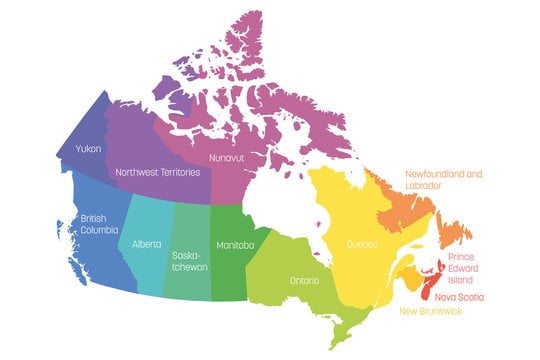
PNPs absorbed most of the SUV displacement and the September draw numbers show it. Roughly 80% of founder immigration files landing in Canada right now run through a province, not Ottawa.
BC PNP Entrepreneur Immigration
Still the strongest option for tech founders. The Tech Pilot processes qualifying occupations in 5 to 7 weeks. Entrepreneur Immigration requires $200,000 investment, one full-time Canadian job, and $600,000 personal net worth. August's draw invited 61 entrepreneur candidates, a record. Vancouver's ecosystem anchors it. Read our BC startup ecosystem breakdown and Built In Vancouver's top startups list for what you're joining.
Ontario Entrepreneur Stream
$200,000 investment inside GTA, $100,000 outside. Two Canadian jobs. Net worth $800,000 GTA, $400,000 outside. OINP's fast-track lane for founders with an Ontario tech company doing $250K+ ARR issued 38 invitations in August, up from 22 in June. Toronto's depth is unmatched. Start with building a startup in Toronto.
Alberta, Saskatchewan, Manitoba
Alberta: $100,000 rural, $200,000 urban. Calgary tech density keeps compounding, particularly in energy AI. Saskatchewan and Manitoba sit at $150,000 to $200,000 with shorter waitlists but thinner engineering pools, which matters when you're hiring.
For a side-by-side, see best province for Canadian founders.
The C11 Work Permit Is the Real Replacement
If PR is too slow (and 38 months is too slow), C11 is the fast lane most funded founders should be running right now.
C11 (Significant Benefit) Work Permit
For owner-operators of a Canadian business delivering "significant social, cultural, or economic benefit." No LMIA. Processing is 4 to 10 weeks in September, down from 5 to 12 in July as IRCC redirected officers off the SUV queue. Approvals are up 41% year-over-year.
The bar in Q3 2026 looks like:
- Minimum $200,000 committed capital (own funds, angel, or fund). Up from $150K in July
- A real Canadian office lease, not a virtual address. IRCC is spot-checking
- At least one Canadian hire on payroll within 90 days of landing
- 24-month financial projections that survive an officer with a spreadsheet
C12 (Intra-Company Transfer)
If you already run a foreign company with 12+ months of operations, transfer yourself to a Canadian subsidiary as executive, manager, or specialized worker. Processing: 2 to 7 weeks. You need a genuine Canadian office and a credible plan.
Global Talent Stream
Two-week processing for designated tech roles. You need a Canadian employer entity (which can be yours if structured right) and an LMIA. Vancouver prevailing wage for senior software is $102,000 as of the September 2026 wage table update.
Once you land on any permit, you stack Canadian work experience toward Express Entry. CEC draws in September 2026 cleared at 454. A year of Canadian experience and decent English scores get most founders through.
Structure matters immediately. Our post on the Delaware flip question for Canadian founders covers how your entity choice affects both immigration and your eventual raise, and Canadian founders with US investors is essential if you're taking American money into a Canadian entity.
What To Do This Week: September 2026 Action List
Based on where you sit today:
- You filed by June 30, 2025 or 2026: Assume 30 to 40 months and a 53% refusal risk. File a C11 in parallel. Do not wait on IRCC.
- Strong traction, $500K+ committed, Canadian co-founder: Enter the Entrepreneur Pilot. Expect 4% odds. Run PNP in parallel.
- Solid traction ($150K+ ARR or $200K+ committed), no Canadian co-founder: C11 work permit. File within 60 days. Land, build Canadian experience, transition to PR via Express Entry.
- Pre-revenue or early-stage: Skip federal. Target BC or Ontario PNP entrepreneur streams, or land as a Global Talent Stream hire at an existing Canadian company.
- Already running a foreign company 12+ months: C12 intra-company transfer. Fastest path in September.
- French speaker: Quebec's Entrepreneur Program requires CLB 7 French and has meaningfully lower competition than any federal stream. Still one of the best-kept secrets.
Counsel matters more than a year ago. IRCC officers are flagging boilerplate business plans, generic capital commitment letters, and template Canadian office leases. Our best startup lawyers in Canada 2026 list covers who's actually clearing these files.
The fundamentals of building in Canada haven't shifted. SR&ED still refunds 35% of qualifying R&D spend. Federal small business rate stays at 9% on the first $500,000. Talent pipelines from UBC, Waterloo, U of T, and McGill are stronger than they've been in a decade. The Canada vs US startup comparison still tilts favorably for capital-efficient companies. The visa changed. The reasons to build here didn't.
Common questions
Can I still file an SUV application? No. The grace period closed June 30, 2026. Any pre-2026 commitment certificate is void for federal PR purposes.
Will the SUV reopen? Not before 2029. The 2026-2028 Levels Plan is locked and the Minister publicly ruled out expansion in September.
Does the Entrepreneur Pilot lead to PR or just a work permit? Direct to PR. Same endpoint as the old SUV, 500 slots per year, and roughly 4% selection.
What's the fastest legitimate path to Canada right now for a funded founder? C11 work permit into a Canadian subsidiary you incorporate. Land in 8 to 10 weeks. Build a year of Canadian experience. Apply Express Entry under CEC. Total time to PR: roughly 28 months, but you're operating in Canada from month 3.
Founders working through this in real time
Roughly 40% of the founders at Founder Feast tables in Vancouver and Toronto this fall are mid-way through some version of this immigration puzzle. Every dinner has at least one founder waiting on a legacy SUV file, one who's landed on C11 in the last quarter, and one who just cleared a PNP nomination. The conversations move faster than any paid consultation because everyone at the table has either solved it or is solving it now. Five founders, one table, no pitching. Apply here if you want a seat.