Angel investors in Vancouver are easier to find than most founders think and harder to reach than most founders expect. The city has a real population of people who write early cheques from their own pocket, a handful of organised groups, and a provincial tax credit that shapes how they behave. What it does not have is a front door. Almost every angel cheque here follows a warm introduction, and almost every warm introduction comes from another founder.
What angel investors in Vancouver typically look like
Most people who write angel cheques in Vancouver would never call themselves angels. There is no directory, and the ones on lists are a fraction of the ones who invest. They tend to fall into three groups.
- The exited operator. Vancouver has produced a steady run of companies sold to larger acquirers, often American ones. The founders and early employees who came out of those exits are the most active angels in the city. They invest in what they understand and move quickly when they recognise a pattern.
- The senior tech person. The city hosts large engineering offices for global companies and a set of local companies that grew big. People who spent a decade inside them, with equity that vested, often write a few cheques a year. They take longer to decide, because the money is savings rather than winnings.
- Family and professional money. Some Vancouver angels made their wealth outside tech: real estate, resources, a professional practice, a family business. They tend to invest through a group, because they want the screening and experienced co-investors, and they lean on whoever is leading.
The BC tax credit, and why angels ask about it
British Columbia runs a small business venture capital programme under which an investor who buys shares in a registered eligible business corporation can claim a provincial tax credit, currently 30 percent of the investment. That is a large enough incentive that experienced BC angels will ask whether you are registered, sometimes before they ask about revenue. Registration has conditions, and it is a question for your lawyer and accountant: ask whether your company qualifies, what it costs, and what it commits you to. Ask before the raise, not during it.
How an angel differs from a VC
A venture fund invests money raised from other people and owes those people a return inside a fixed number of years. An angel invests personal money and owes nobody an explanation. Almost every practical difference follows from that.
- Cheques are smaller and there is rarely a lead. A VC can fill a round alone. An angel fills a slice of one and wants to know who else is in before committing, so expect the first question to be about your other investors, not your product.
- Speed depends on trust, not process. A fund has a partner meeting and a checklist. An angel can wire in a week if they know you, or drift for six months if they do not.
- They cannot follow on much. An angel who wrote one cheque may not manage a second when the next round comes. Plan the round so it does not depend on the same people twice.
Most Vancouver founders raise from angels first and funds later. When you get there, our guide to raising VC in Vancouver covers the active funds and how first meetings happen.
What an angel cheque looks like
An individual angel cheque in Vancouver is usually measured in the tens of thousands of dollars, with a lead sometimes writing more. A syndicate assembled through one of the groups can take a round into the hundreds of thousands. A Canadian pre-seed round is often built from a dozen such cheques, a lead, and non-dilutive money on top, which we laid out in our playbook on raising pre-seed funding in Canada.
The National Angel Capital Organization publishes a yearly report on angel investing in Canada, with averages by region. Read the latest edition for current numbers. Convertible notes and SAFEs are common at this stage, priced rounds less so, and which fits you is a conversation with a BC lawyer to have before your first angel meeting.
The organised angel groups in BC
Groups are venues, not decision makers. Each member invests individually, and the group's job is to screen, gather people in one room, and make syndication easy.
- VANTEC Angel Network. VANTEC has run regular meetings in Vancouver since 1999, where screened early-stage companies present to a room of accredited investors. You apply, you are screened, you present, and then you work through diligence with the members who raise a hand.
- Angel Forum. One of the longest-running angel groups in Western Canada. It runs in-person pitch events and larger summits in Vancouver, companies apply through its online deal platform, and the focus is early-stage technology in BC and Western Canada.
- Keiretsu Forum, Vancouver chapter. A global network of accredited investors organised in chapters, with Vancouver inside its Northwest region. Members tend to be experienced operators who expect a polished presentation and bring domain expertise alongside the cheque.
Pitch nights and demo days sit on the wider event circuit, and we rated which ones founders actually attend in our guide to Vancouver startup events. Go to them. Just understand what they are for.
How introductions actually happen
The pitch event is not where the angel decides. By the time you present, the members who matter have seen the list, and the ones who take a meeting afterwards usually heard your name from someone they trust beforehand. The room is a confirmation, not a discovery. The introductions that land come in a rough order of strength.
- From a founder they have backed. The strongest intro in the city. An angel will read an email from a founder they invested in and usually take the meeting on that founder's word alone.
- From another angel. Angels syndicate with people they know, so an angel who likes you but is out of capacity will often pass you along.
- From lawyers, accountants and group screeners. They see every deal in town and are careful with their names, which is exactly why their intros carry weight.
- Cold, rarely. A cold email to a Vancouver angel works only when it reads like a warm one: short, specific about why this person, and carrying at least one name they recognise.
How to prepare before you ask for the intro
A warm intro is a favour someone does with their own reputation. Make it easy to give.
- Know your number and your instrument. How much you are raising, what it buys, and on what terms. If you cannot say it in one sentence, you are not ready to be introduced.
- Clean up the company. Incorporation documents, founder agreements, IP assigned to the company, a short deck, a cap table that fits on one screen. The basics decide whether you look investable.
- Settle the tax credit question first. An angel who asks about registration and hears "we are looking into it" hears "not yet".
- Set a close date. Angels drift without a deadline. A real date, said out loud, is the most useful tool a founder has with individual investors.
If later rounds are likely to need US money, it is worth knowing now what American investors want from a Canadian company. We covered that in how Canadian founders raise from US investors.
Why sitting with founders who have raised is the fastest route
Every route above starts with a person who already trusts you, and the strongest one starts with a founder who has raised. So the real question is how to meet founders who have already met angels, and to know them well enough that they would put their name next to yours.
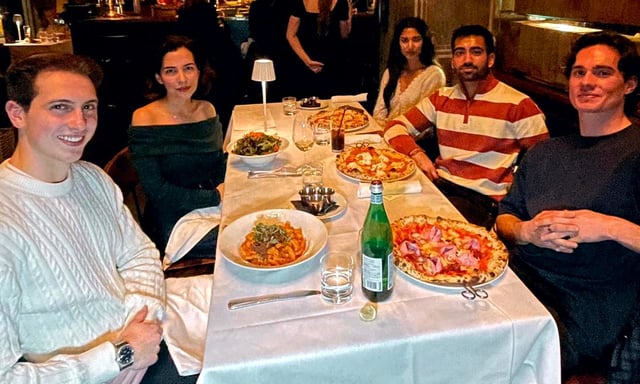
That is what a Founder Feast table is for. Five hand-picked founders, one restaurant we chose, every Thursday at 7pm. Vancouver has run every week since 2025. You find out the restaurant and the four founders joining you the day before dinner, and you do not choose your tablemates, which is the point: you sit with founders you would not have found on your own, some of whom closed a round last year and know exactly who wrote the cheques.
To be precise about what it is and is not: the tables are founders. Investors are not seated at them, and there are no panels, no badges and no pitches. Selling to the table gets you not invited back. The investors come through the founders you meet, over weeks of dinners, coffees, runs and hikes, once the person across from you knows what you are building and thinks it is worth a call. That is slower than a pitch night, and it works far more often.
Membership is CA$39.99 a month and covers your seat at every weekly dinner. You pay the restaurant for what you eat on the night. Cancel anytime. You apply once, and every member is vetted before they sit down. Coffees, runs and hikes between dinners are free to join, and the app carries the directory and member-to-member chat. We wrote about how a Vancouver dinner night runs in our post on founder dinners in Vancouver, and when an angel suggests dinner, our map of where Vancouver investors take founders to eat covers the rooms by stage.
Common questions
Who are the angel investors in Vancouver? Mostly people who made their money in the city: founders who sold a company, senior people from the larger tech employers, and professionals or families investing part of their own wealth. Many invest through organised groups such as VANTEC, Angel Forum and the Vancouver chapter of Keiretsu Forum, and many more invest quietly on their own.
How much does an angel investor in Vancouver typically invest? An individual cheque is usually measured in the tens of thousands of dollars, sometimes more from a lead angel. A syndicate through one of the groups can take a round into the hundreds of thousands. The National Angel Capital Organization publishes a yearly report with current averages across Canada.
How do founders get introduced to angel investors in Vancouver? Almost always through another founder. An angel who has backed someone will read an email from that person and rarely one from a stranger. Pitch events and group screenings are where angels meet founders who already came recommended, so the work is meeting founders who have raised before you need the intro.
Does Founder Feast connect founders with investors? Not directly. Founder Feast tables are five vetted founders, never a pitch, and selling to the table gets you not invited back. The investors come through the founders you meet: people who have raised in Vancouver know exactly who writes cheques and are usually glad to make an introduction.
If you are building in Vancouver and want to stop being a stranger to the founders who have already raised here, apply for a seat. It takes a few minutes, and if you are accepted you never apply again.