Search for apps to meet other founders and you'll find lists that pretend one tool does everything. None of them does. Every app below is genuinely good at one thing and quietly mediocre at the rest, including ours. Here's what each one is actually for, so you can stop collecting apps and start collecting people.
X, still the fastest cold intro in tech
For raw reach, nothing beats X. The founder and investor scene still lives there in 2026, and a sharp reply or a specific DM can reach almost anyone, from a solo builder to a fund partner. Building in public works on X in a way it works nowhere else: ship something interesting, narrate it honestly, and the right people find you.
What it's good at: cold outreach, serendipity, and being findable. What it isn't: depth. An X mutual is a lead, not a relationship, and the feed is engineered to keep you posting rather than meeting. The founders who win on X treat every good thread as an excuse to get on a call.
LinkedIn, where the follow-up lives
LinkedIn is the identity layer of professional life, and that's worth more than its reputation suggests. It answers "who is this person really" better than any other tool, it keeps the thread alive after you meet someone, and for B2B founders it doubles as a sales channel.
What it's good at: research before a meeting and continuity after one. If you sell to companies, it's also where your buyers are. What it isn't: a place where founder friendships start. The tone is professional by design, which makes it the follow-up tool, not the first-touch tool.
Luma, the events layer
By 2026, if a startup event exists in your city, it's probably on Luma. The calendar-follow model is the killer feature: subscribe to a few good hosts and your week fills itself. It's how most founders in SF and LA discover what's actually happening, and it's where our own first dinners in both cities are listed.
What it's good at: discovery and frictionless RSVPs. What it can't do: guarantee the room. Luma is only as good as the host behind each event, so the skill is learning which hosts consistently draw people you want to meet. Our city guides to meeting founders in San Francisco and meeting founders in Los Angeles name the scenes worth following.
Timeleft, dinners with strangers
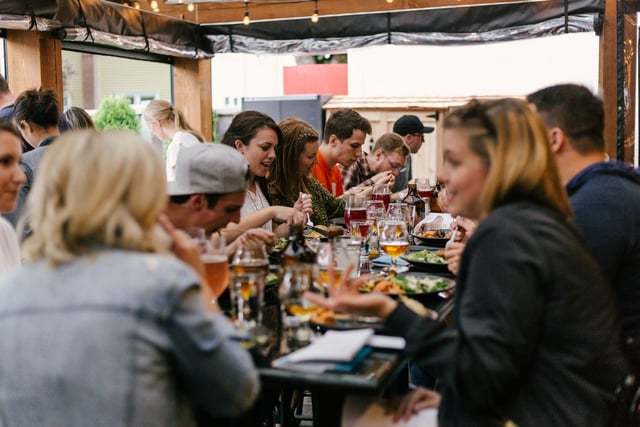
Timeleft seats you at a restaurant with a small group of strangers matched by a personality quiz, and it operates in a long list of cities. It's a well-made consumer product with a warm idea at its core: dinner with people you'd never otherwise meet. If you've just moved somewhere and want interesting company midweek, it delivers.
What it's good at: social life, novelty, and low-stakes conversation. The honest caveat for this audience: it isn't founder-specific, so your table might hold a teacher, a nurse, and a lawyer. Lovely dinner, different job. If you want the same format with an all-founder table, we wrote a detailed comparison for founders.
Meetup, the long tail
Meetup predates everything else on this list and still does one thing well: recurring niche groups. A monthly indie hacker circle, a language-specific engineering group, a bootstrapper breakfast in a mid-sized city. In smaller markets it's often the only structured option, and the recurring format means faces repeat, which is how acquaintances form.
What it's good at: consistency and the long tail of topics and towns. What to expect: quality varies widely by organizer, and in the big hubs much of the startup energy has migrated to Luma. Check when the group last actually met before you plan your evening around it.
Slack and Discord communities
Accelerator alumni groups, vertical communities for your industry, paid founder communities, open builder Discords: this is where async depth lives. A good community answers the question a search engine can't, at midnight, from someone who solved it last quarter. The best ones are gated, which keeps the signal high.
What they're good at: specific help, honest benchmarks, and feeling less alone on a weird problem. The failure mode is lurking forever: a community only compounds if you post, answer, and eventually meet members in person.
The Founder Feast app, in-person first
Ours, so judge accordingly. The Founder Feast app is built around one real-world event: a dinner at 7pm every other Thursday for 5 hand-picked founders, in Vancouver, San Francisco, and Los Angeles. You apply once, every member is vetted, and the restaurant and your table are revealed 24 hours before dinner. The directory, the community feed, the table and city chats, and the map all point at that table.
Membership is $39.99 a month (CAD in Vancouver, USD in San Francisco and Los Angeles), covers your seat at every dinner, cancel anytime, and you pay the restaurant for what you eat. Accepted members book a seat in the app, meet their table after the reveal, and keep talking in the table's in-app chat, with the full member area also on the web at founderfeast.com. What it's good at: converting app time into face time with people who share your exact job. What it's not: a feed to scroll. We've written before about why the dinner format works, and the short version is that five vetted people for two hours beats two hundred handshakes.
How to actually use this list
Don't pick one. Stack them by job: X for reach, LinkedIn for follow-up, Luma for the calendar, Timeleft for social life, communities for async depth, and a vetted dinner club for the handful of relationships that end up mattering. Every tool above works best when it's a pipeline to a table, a coffee, or a call. The app is never the point. The person across from you is.
If the dinner side sounds like the missing piece, apply for a seat. We read every application, and there's a Thursday coming up in your city.
Common questions
What is the best app to meet other founders in 2026? There is no single best app, only the best tool per job. X is fastest for cold reach, LinkedIn for follow-up, Luma for finding events, Slack and Discord communities for async depth. For meeting founders in person, a vetted dinner club like Founder Feast turns one Thursday into four real relationships.
Is Timeleft good for meeting founders? Timeleft is a well-made consumer app for dinners with strangers and a good way to build a social life in a new city. It is not founder-specific, so your table usually spans many professions. Founders who want an all-founder table tend to pair it with a vetted founders dinner club.
How do founders meet other founders online? Mostly through X DMs, LinkedIn, accelerator and community Slacks, and event platforms like Luma. Online works best as a first touch: the relationships that survive are the ones that move to a coffee, a call, or a dinner. Treat every app as a pipeline to an in-person meeting.
Is there an app for founder dinners? Yes. The Founder Feast app runs dinners every other Thursday for vetted founders in Vancouver, San Francisco, and Los Angeles: apply once, reserve a Thursday, and get the restaurant reveal 24 hours before. It is on the App Store, and the full member area also works at founderfeast.com.
Do founder networking apps actually work? They work for what they are built for. Apps are excellent at discovery: finding who exists, what is happening, and who to message. They are weaker at depth. The founders who get the most from these tools use them to set up in-person time, then let the relationship live offline.