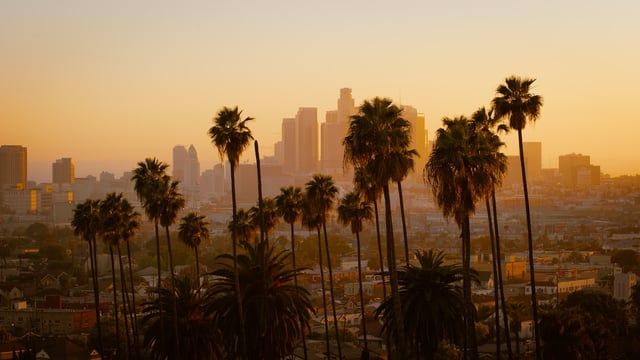
LA venture isn't dead. It just moved. The old Silicon Beach, the Santa Monica to Venice stretch that produced Snap, Dollar Shave Club, and Honey, has quietly reshuffled into something broader. Aerospace money now flows into El Segundo. AI studios set up in Culver City. Creator tool companies park near Westwood and Marina del Rey. If you squint at the 2025-2026 funding map, it looks less like a beach and more like a 20 mile corridor.
The headline number: LA metro startups pulled in roughly $18B in venture across 2025, per PitchBook and Crunchbase tallies. That's below the 2021 peak but above 2023 and 2024. The mix has changed more than the total. Consumer is quiet. Defense, AI infrastructure, and climate hardware are loud. And the founders writing the next chapter don't look like the DTC crew that defined Silicon Beach 1.0.
Here's a breakdown of which silicon beach startups actually closed rounds, which sectors dominate, and what LA founders should build next.
The 2025-2026 funding scoreboard
Aerospace and defense ate the biggest slice. Anduril closed a $2.5B round in August 2025 at a $30.5B valuation, with Founders Fund leading. Hadrian, the precision manufacturing company based in Torrance, raised a $260M Series C to expand factory capacity for defense primes. True Anomaly, the space security company, added $260M in October 2025. K2 Space pulled in $110M for large satellite buses.
AI infrastructure and vertical AI followed close behind. Writer, now headquartered partially in LA, extended its Series C by $200M. Suno, the AI music generation company with heavy LA creative ties, hit a reported $2B valuation in mid-2025. Pika Labs, the video generation startup, raised another $80M. Rad AI, which builds AI tools for radiologists, closed $60M.
Creator and media tools remain a real category. Cameo picked up strategic funding. Clash, the short video platform from the Vine cofounder, raised a bridge. Tubi spinoffs and creator SaaS tools kept closing smaller $5M to $20M seed and A rounds.
Climate hardware is quietly strong. Antora Energy, the thermal battery company, closed $150M in early 2026. Terradot, the carbon removal startup with LA operations, added $58M. EV charging and grid software companies pulled another $400M combined.
Consumer and DTC? Mostly quiet. A few exceptions: Thrive Market extended its line, and a handful of beauty brands raised modest rounds. The 2015 to 2020 playbook is largely done.
Why El Segundo became the new Palo Alto
El Segundo sits ten minutes from LAX, next to SpaceX's original Hawthorne facility, and now houses Anduril, Hadrian, Apex Space, Impulse Space, and a growing cluster of defense tech teams. The joke is that you can't throw a wrench in El Segundo without hitting a Series B hardware company. The joke is close to true.
Three things drove this. First, the SpaceX talent diaspora. Roughly 12,000 people have passed through SpaceX, and many stayed in LA. Second, defense procurement reform. The DoD's Replicator initiative and the shift toward attritable autonomous systems opened real revenue lines for startups that would have been unfundable in 2018. Third, physical infrastructure. LA has industrial space, port access, and a talent pool that can actually build things, not just ship software.
For founders thinking about where to plant a flag, this matters. If you're building hardware, biotech, or anything that needs a factory floor, LA has a real edge over SF. If you're building pure software, you can work anywhere, and a lot of founders split time with the Bay Area. We've written about the related Cerebral Valley networking question for AI founders and whether those scenes are worth the pilgrimage.
The AI studios and who's actually shipping
LA has a specific flavor of AI company: creative tools, media workflows, and vertical SaaS for industries that happen to cluster here (entertainment, legal, real estate, logistics through the port).
Promising ones from the 2025-2026 cohort:
- Runway keeps shipping new models and closed a $300M round at a $3B valuation. The video generation space is now a real market.
- Captions, the AI video editing tool, raised a $60M Series C. Creator workflow, not generation.
- Hume AI moved key ops to LA and raised $50M for voice emotion models.
- Civitai and a cluster of open model infrastructure companies pulled seed rounds.
- Figure (humanoid robots, based in Sunnyvale but with LA hiring) grabbed attention with a $675M round, which matters because it pulls hardware talent south.
A pattern: LA AI companies tend to win on distribution to creators and enterprise, not on foundation model research. The ones that raised best had real revenue, usually $2M to $10M ARR by Series A, which is a higher bar than SF peers who can still raise on vision. If you're a founder weighing geography, the AI startup landscape elsewhere has different trade-offs on dilution and talent cost.
What's underfunded and worth building
Every funding cycle leaves gaps. Here's where LA is thin and a 2026 founder could win.
Logistics software for the ports. LA and Long Beach move roughly 40% of US container traffic. The software stack is ancient. A handful of startups (Portcast, Loop) are picking at this. Room for more.
Entertainment back office AI. Residuals, rights, scheduling, post-production coordination. The 2023 strikes exposed how fragile these systems are. Studios will pay.
Climate hardware for the Western grid. California's grid is stressed, battery deployment is accelerating, and the gap between software planning tools and hardware deployment is wide. Antora is one company. There's room for ten.
Defense tech for allied markets. Not every founder wants to sell to the Pentagon. Australia, UK, Japan, and Nordic defense budgets are growing. LA hardware talent plus allied market focus is underexplored.
Vertical AI for small business operators. Dentists, auto shops, independent restaurants. LA has the small business density and the creative talent to build these interfaces. Most SF AI companies ignore this market.
If you're deciding between building here or elsewhere, we've looked at the tradeoffs in US vs Canadian startup geography and why some Canadian founders move to the Bay Area. LA sits in an interesting middle: cheaper than SF, deeper talent than most other US metros, better weather than all of them.
The capital stack has shifted
Three years ago, an LA seed round meant Upfront, Mucker, and a handful of SF funds slumming it south. In 2026, the stack looks different.
LA based funds writing checks now: Upfront (still the anchor), MaC Venture, Fika Ventures, BAM Ventures, Wonder Ventures at pre-seed, Alpha Edison, March Capital for later stage, Riot Ventures for hardware and defense, Overmatch for defense specifically.
Out of town funds with real LA presence: Founders Fund (El Segundo focus), a16z (opened a Santa Monica office in 2024), General Catalyst, Lux Capital for deep tech, Lightspeed for consumer.
New entrants: Family offices from entertainment wealth got more active. Several Saudi and UAE funds opened LA desks. Japanese strategics (SoftBank aside) stepped into aerospace deals.
What this means tactically: you can run a full seed and Series A process in LA now without boarding a plane. That wasn't true in 2019. If you're earlier and still building your network, the dinner and small event circuit here has grown up. The best dinner clubs in San Francisco piece has useful parallels for how LA founders are using small gatherings instead of big conferences.
What LA founders should build next
If you're starting something in LA in 2026, a few principles from the funded cohort:
- Pick a sector LA has structural advantage in. Aerospace, entertainment tech, logistics, climate hardware, creator tools. Don't try to out-SF the Bay on foundation models.
- Revenue earlier than your SF peers. LA investors, even the aggressive ones, want to see traction. Plan to hit $1M ARR before your A, not after.
- Hire from the diaspora. SpaceX, Snap, Riot Games, Disney, Hulu, Honey, Dollar Shave. These companies minted operators who are now available and know how to ship.
- Don't skip the east side. DTLA, Pasadena, and Glendale have cheaper office space and real talent. Not everything needs to be in Santa Monica.
- Build for distribution you can access. LA is the media capital of the world. If your product can ride that, use it. If it can't, be honest about why you're here instead of in SF.
The founders who built the first wave of silicon beach startups are now angels and operators. The ones building the second wave are quieter, more technical, and less interested in TechCrunch. That's a healthy shift.
Common questions
Is Silicon Beach still a useful term? Sort of. The geographic center has moved south and east, but the brand sticks. Most founders just say "LA" now.
Can you raise a seed round in LA without flying to SF? Yes, in 2026 you can. Five years ago, no. The LA seed ecosystem has real depth now.
How does LA compare to SF on dilution? Slightly more founder friendly. Valuations run maybe 10-15% lower at seed and A, but the capital is patient and local relationships are warmer.
Should hardware founders choose LA over SF? Usually yes. El Segundo and the South Bay industrial corridor beat anything the Bay Area offers for space, cost, and defense proximity.
Where founders meet
Good deals and good hires still happen in person. Founder Feast runs small dinners for five founders every other Thursday at 7pm, with tables in Los Angeles, San Francisco, and Vancouver. No pitching at the table, just real conversation with people building real things. Membership is $39.99 a month (USD in LA and SF, CAD in Vancouver) and you pay the restaurant for what you eat. If you want in, apply here. A real person reads every application.