Vancouver added more than 2,400 new tech startups between 2023 and the start of 2026, according to the BC Tech Association's latest report. The talent is here. The capital is here. What's missing, for most founders, is a way to actually meet the other 2,399.
The city doesn't have a SoMa or a King West where founders bump into each other by accident. Vancouver's startup scene is scattered across Gastown, Mount Pleasant, Yaletown, the North Shore, and increasingly Surrey. If you wait for the right people to cross your path, you'll be waiting a long time.
Here's how to build a real network in Vancouver in 2026, what's worth your Thursday night, and what to skip.
If what you actually want is a group to join, we keep a separate directory of 12 Vancouver entrepreneurs groups, with who each is for, what it costs and how to get in. This post is about how to meet people, not which membership to buy.
The Vancouver networking landscape in 2026
The event calendar has thickened considerably since 2023. BC Tech Summit pulls in 6,000+ attendees every May. Web Summit Vancouver landed in 2024 and now runs annually in late May with 15,000 people. Launch Academy still runs its Tech Entrepreneur Fundamentals program, and the Vancouver Startup Week in September has grown into a 10-day sprawl across more than 40 venues.
Then there's the steady drumbeat of meetups: Vancouver Founders, SaaS North West, Women in Tech Vancouver, the AI Builders Vancouver group that exploded out of the post-2023 LLM wave, and the Climate Founders BC dinners that started running monthly out of Mount Pleasant.
It looks like an abundance. It mostly isn't. Most of these events optimize for headcount and sponsor logos, not for the quality of conversation you'll have at 8:43pm on a Tuesday. You'll collect business cards. You'll add LinkedIn connections. You'll wake up Wednesday with nothing actually changed about your company.
For a more complete rundown of what's actually worth attending, see our guide to Vancouver startup events in 2026.
Why scale kills connection
The math is simple. At a 150-person mixer running 90 minutes, you'll talk to 6 to 8 people for an average of 4 minutes each. None of those conversations get past surface-level. Nobody admits the thing they actually need help with. Nobody tells you their real revenue number.
The founders building strong Vancouver networks aren't grinding the event circuit. They're doing the opposite. They host 6-person dinners. They take one coffee per week with someone two years ahead of them. They reply to cold DMs from earlier-stage founders because they remember being there 18 months ago.
The reason is simple: the connections that produce funding intros, key hires, or customer referrals need context, and context comes from small groups where people actually talk. Our Vancouver founders guide covers who is building in the city and where they spend their time.
For the full thinking on this, our piece on how to network as a founder breaks down the depth-versus-breadth math in more detail.
Neighbourhoods that actually matter
Gastown and Railtown is still the gravitational center. Hootsuite's old building, Dapper Labs, Klue, and a long list of Series A and B companies anchor the area. Wildebeest, L'Abattoir, and Ask For Luigi remain the founder dinner staples. Our Gastown founders guide maps the full territory.
Mount Pleasant and Main Street is where DTC brands, climate tech, and design-led startups cluster. Annalena, Bao Bei, and the newer Published on Main attract a different founder energy. More creative, more bootstrapped, less VC-pilled. See Mount Pleasant startup dining for the current map.
Kitsilano and Point Grey lean older and more established. Second and third-time founders, angel investors, exited operators. If you need a mentor more than you need a peer, this is your zip code. We covered this scene in Kitsilano founder networking.
North Vancouver has quietly become the hub for outdoor, wellness, and hardware founders. Arc'teryx alumni, Lululemon vets, and the Sea-to-Sky climbing crowd. The North Vancouver founders scene is small but tight.
Yaletown is the venture capital corridor. Yaletown Partners, Pender Ventures, BDC Capital. If you're raising, you'll spend time here, and the Yaletown restaurants founders pick for investor dinners are where those conversations happen. The wider map of where Vancouver investors take founders covers the rest of the city.
What's working in 2026 (and what isn't)
What's working: small dinners, founder houses, and curated Slack groups. The Vancouver Founders Slack now has 3,800+ members but the real activity happens in private sub-channels of 15 to 30 people organized by stage or vertical. Operator dinners hosted at private homes have replaced a lot of what used to be sponsored happy hours.
What's also working: showing up to the same thing repeatedly. The founders who get value out of Vancouver's ecosystem treat networking like compounding interest. They go to the same monthly dinner for 14 months. They host the same Thursday breakfast for two years. Reputation builds through repetition.
What isn't working: 200-person rooftop mixers, conference floors, and any event where the speaker list is longer than the attendee list of people you'd actually want to know. The post-pandemic gold rush of startup events has cooled, and most founders are choosing depth.
What's also fading: LinkedIn DMs as a primary channel. Response rates have collapsed to under 3% for cold founder outreach in 2026, per the data from Apollo's outbound benchmarks. Warm intros, in person, still convert at 30-40%.
The Founder Feast approach
We started Founder Feast because the gap between "I went to a networking event" and "I made a real connection" had gotten ridiculous. Vancouver doesn't need more lanyards. It needs more tables.
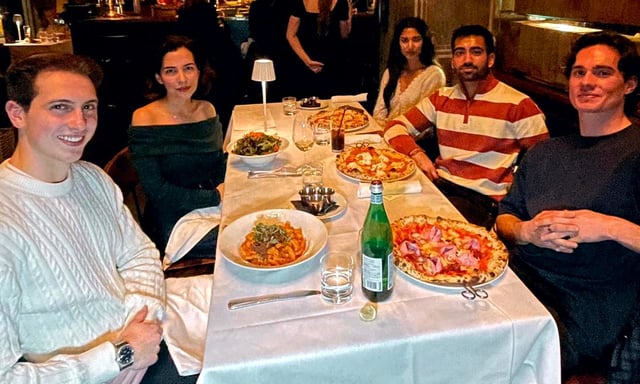
Every other Thursday at 7pm we put 5 hand-picked founders together at a restaurant chosen for the conversation, not the Instagram angle. You tell us your stage, your neighbourhood, and what you're working on. We do the matching. You show up, eat, and leave with two or three founders who actually understand what your week looked like.
No pitching at the table. That rule is sacred. The dinners that work are the ones where nobody's selling. People drop their guard, share the real numbers, and the connections that form keep producing value six and twelve months later. We wrote more about this in Founder Feast vs networking events.
The Vancouver dinners book up fastest, usually 10 to 14 days in advance. Membership is $39.99 CAD a month and covers every dinner you book, so booking early costs nothing extra.
Build the network before you need it
The Vancouver founders who raise faster, hire better, and ship harder aren't doing anything magic. They built relationships when they didn't need anything. They showed up consistently. They picked smaller rooms.
If you're a year out from raising your Series A, your network for that round is being built right now. The founder who introduces you to your lead investor in 2027 is someone you should be eating dinner with in 2026.
You can apply for a Vancouver dinner or just start here and we'll get you on the next available Thursday.
Common questions
How much does it cost to network effectively in Vancouver? Almost nothing if you're patient. Most of the high-signal stuff (founder breakfasts, Slack communities, peer dinners) is free or under $50. The expensive conferences are usually the lowest-ROI option for early-stage founders.
I'm a first-time founder with no network. Where do I start? Pick three communities and go deep. One online (Vancouver Founders Slack), one event (a recurring monthly dinner or breakfast), and one program (Launch Academy or a similar early-stage accelerator). Show up to all three for six months before judging the results.
Is Vancouver better or worse than Toronto for networking? Different. Vancouver is smaller and more relationship-driven. Toronto has more events and capital but is less personal. We broke it down in Vancouver vs Toronto startups.
Should I network in person or online? Both. Online is for discovery and maintenance. In person is where trust gets built. The founders who only do one of these end up with thin networks.