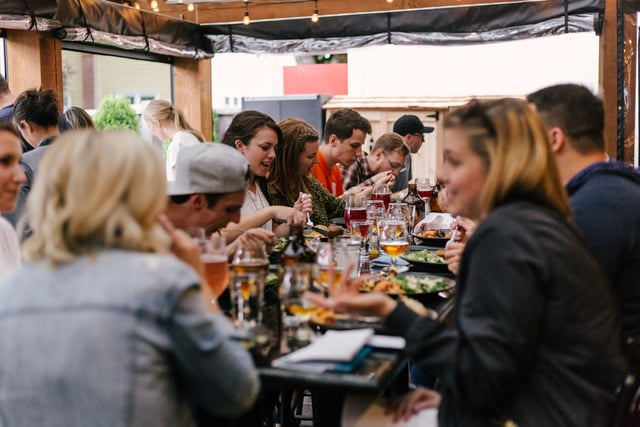
I've been to four Timeleft dinners in the last year. Two in Vancouver, one in San Francisco, one in Los Angeles. I run a startup, I paid the subscription out of pocket, and I went in with the specific question most founders are asking: is Timeleft worth it when your time is the most expensive thing you own?
Short answer: sometimes, and not for the reason their marketing suggests. Timeleft is excellent for a specific thing. It's bad for the thing most founders secretly want it to do.
This is the honest version. No affiliate link, no PR angle, just what six dinners with strangers taught me about where random-table networking fits into a founder's life.
What Timeleft actually is
Timeleft matches six strangers for a Wednesday dinner at a restaurant it picks. You answer a short personality quiz when you sign up. The algorithm clusters you with five people it thinks you'll click with. You all show up at 7pm, order off the regular menu, split the bill, and optionally go to a bar afterward where other Timeleft tables meet up.
Pricing in 2026 is roughly $20 USD per dinner on a pay-per-event basis, or around $17 to $19 per dinner if you take a monthly subscription. You pay the restaurant separately for your food and drinks, which usually runs $40 to $90 depending on the city and whether you order wine.
So a Timeleft night is realistically $60 to $110 all in. That's not expensive by SF dinner standards. It's not cheap either, especially if you do it weekly.
What Timeleft is not: it is not a founder network, an industry event, or a curated room. It's a mixer. That distinction matters a lot for whether it's worth your Wednesday.
Who actually shows up at the table
Across my four dinners, here's roughly who I sat with:
- Two product managers at mid-size tech companies
- A corporate lawyer
- A nurse practitioner
- A UX designer freelancing for agencies
- Two people in marketing roles
- A grad student in public policy
- A sales rep at a SaaS company
- A dentist
- A film editor
- One other founder, exactly one, across all four nights
That's not a complaint. Timeleft isn't trying to put founders together. The mix is the product. Most attendees are 28 to 42, educated, new-ish to the city or looking to expand their social circle outside work. The vibe is friendly. People are open. Nobody is there to sell you anything, which is honestly refreshing after a year of founder dinners where someone always slides into a pitch by dessert.
If you go in wanting to meet interesting humans, Timeleft delivers. If you go in wanting to meet your next co-founder, lead investor, or design partner, you're going to leave disappointed four nights out of five. That math doesn't change if you do ten dinners. You're fishing in a different pond.
The signal-to-noise question
Here's the frame I use for any networking spend. Signal is a conversation that materially changes something: a hire, a customer, a check, a hard lesson I didn't have before. Noise is pleasant conversation I'll forget by Friday.
Across four Timeleft dinners, I got one signal event. The lawyer at my LA table introduced me to a corporate partner at her firm who ended up quoting us on a stock plan refresh. Useful. Not life-changing. The other three dinners were pure noise in the business sense, and real signal in the human sense. I made two actual friends. I learned things about public health funding and dental practice economics I'd never have stumbled into otherwise.
Compare that to the average curated founder dinner, where maybe three of the five people at the table are directly relevant to your stage and sector. The hit rate on business signal is maybe 40 to 60 percent per dinner instead of 5 percent. That's an order of magnitude difference. If you're trying to find angels in Vancouver, you're better off at an actual founder table than hoping an angel randomly lands at your Timeleft seat.
So is Timeleft worth it? If you're grading it on business ROI alone, no. If you're grading it on quality of life as a founder who moved cities and doesn't know anyone outside work, yes, often.
When Timeleft actually makes sense for founders
I can think of five scenarios where I'd recommend Timeleft to a founder without hesitation:
- You just moved. You're a Canadian founder who relocated to San Francisco and your contact list is eight people from Y Combinator and your cousin. Timeleft fills your calendar with humans, fast.
- You're in a slump. Startups will grind you into dust if every meal is about the company. A table where nobody knows what a SAFE is can be medicine.
- You want to practice talking to normal people. Founders who only talk to founders forget how to explain their product to civilians. Timeleft is free market research on whether your one-liner lands.
- You're hiring and want to meet operators outside tech. Some of my best early hires came from adjacent industries. Timeleft has these people.
- You're exploring a new city. If you're thinking about expanding or moving your HQ, a few Timeleft nights give you a quick read on the local vibe.
Scenarios where I'd skip it: you're actively fundraising, you're pre-seed and desperate for design partners, you only get one free evening a week, or you already have a saturated founder network and want higher signal. In those cases your Wednesday is better spent at something like a San Francisco dinner club built for the people you actually need to meet.
Timeleft vs curated founder dinners
The honest comparison isn't Timeleft vs doing nothing. It's Timeleft vs the other things you could do with a weeknight.
A random-stranger dinner is optimized for breadth and serendipity. A curated founder dinner is optimized for density. Both are legitimate. They solve different problems.
Founder Feast runs dinners of five founders at a restaurant we choose, every other Thursday at 7pm, in Vancouver, San Francisco, and Los Angeles. Membership is $39.99 a month, in CAD in Vancouver and USD in the US cities, and covers the seat. You pay the restaurant for what you eat, same as Timeleft. The difference is the table is five founders. Every single one. You're still going to get surprise and serendipity, because founders across sectors and stages produce it naturally, but the floor on business relevance is way higher.
Timeleft, meanwhile, costs similar per month if you do it weekly but trades density for diversity. Six people, mostly not founders, picked by personality rather than profession.
My practical setup: one Timeleft a month for breadth, two curated founder dinners a month for depth. Different muscles. Both useful. It's the same logic founders use when debating whether Cerebral Valley events are worth it alongside smaller dinners.
The things nobody mentions in Timeleft reviews
A few practical notes from six dinners:
- The algorithm is fine, not magical. Timeleft claims personality matching. In practice the tables feel like "six reasonably curious people who all live in the same part of the city." That's enough. Don't expect soulmate-level pairing.
- Restaurant choice is a lottery. I got one excellent spot, two solid ones, and one loud chain that made conversation hard. You can't pick the venue.
- The after-party is skippable. The optional bar meetup after dinner is where Timeleft tries to turn six people into sixty. It's a normal bar scene. Fine, not essential.
- Cancellation culture is real. Expect one or two no-shows at tables of six, especially in SF. Timeleft doesn't currently penalize this heavily.
- Diversity of industry is the actual product. Every time I describe my work at a Timeleft table, someone asks the question my investors never ask, and it's often the better question.
Common questions
Is Timeleft worth it for pure business networking? Not really. The hit rate for business-relevant conversations is low because it's not built for that. Use it for breadth, not deal flow.
How much does it actually cost per month? If you do a dinner a week on subscription, around $70 to $80 USD in membership. Add food and drinks, you're looking at $300 to $450 a month. Less if you go twice a month.
Is Timeleft worth it in smaller cities? Depends on density. Timeleft works best in cities with enough signups to make real matching possible. In smaller markets the tables can feel more random and less curated.
How does it compare to founder-only dinners? Totally different product. Timeleft is a mixer for strangers. A founder dinner is a working room. If you want both, do both. They're not substitutes.
So, should you try it?
If you're reading this with a packed calendar, a healthy founder network, and specific business goals for every meal, skip Timeleft. Your time is better spent at tables built for your stage.
If you're newer in your city, lonely in the way founders rarely admit to being lonely, or just curious what six strangers in your zip code think about anything, Timeleft is worth $20 and a Wednesday. Go in without expectations and you'll probably have a good night.
For the business-signal half of your calendar, Founder Feast curates five-founder dinners every other Thursday in Vancouver, San Francisco, and Los Angeles. Apply here, a person reads every application, and we'll tell you when the next table in your city fits.