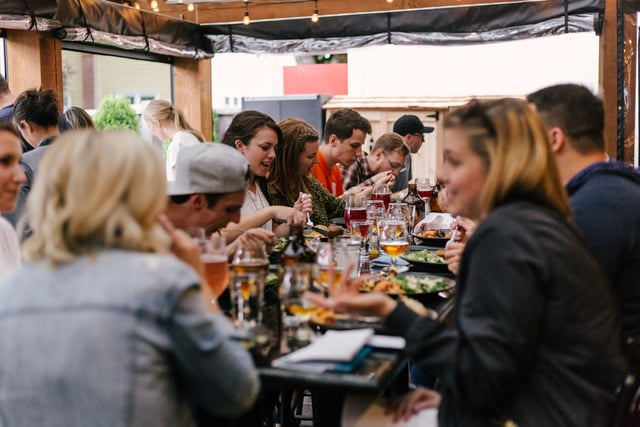
Timeleft advertises a $20 dinner. The actual all-in cost sits closer to $90 once you add the subscription, the restaurant bill, and the two glasses of wine you'll absolutely order to survive small talk with five strangers. That's not a scam. It's just not $20.
The bigger question for founders isn't the price. It's whether a random table of six people, matched by a personality quiz, produces anyone useful to your startup. I've eaten at Timeleft dinners in three cities. I've also hosted dozens of curated founder dinners. The gap between the two experiences is wider than the price difference suggests.
Here's the honest breakdown of what Timeleft costs, what you actually get, and when it makes sense versus when founders should spend their Wednesday night somewhere else.
What Timeleft actually charges
Timeleft's pricing has shifted a few times, but as of late 2026 the structure looks like this:
- Single dinner booking: around $20 USD (varies by city, higher in NYC and London)
- Monthly subscription: $17-20 USD/month for unlimited dinners
- Annual subscription: around $150 USD/year
The $20 "cover" gets you the matching, the reservation, and the icebreaker questions on the app. It does not cover your food or drinks. The restaurant bill is separate and split six ways at the end of the night.
Average Timeleft dinner bill, based on the mid-tier restaurants they book:
- Appetizer or shared starter: $14-18
- Main: $28-36
- One or two drinks: $18-30
- Tax and tip: $14-20
Total per person: $75-100 for the meal, plus the $20 booking fee. Call it $95-120 all-in for a single evening. If you subscribe monthly and go to four dinners, you're looking at $320-480 a month before anyone asks what you do for work.
That's not expensive. It's just not the $20 experience the ads imply.
What you actually get for the timeleft cost
Timeleft matches six strangers using a personality quiz. The algorithm optimizes for "interesting conversation," not profession, industry, or life stage. You might sit next to a dental hygienist, a touring musician, a retired accountant, a grad student, and one other person vaguely in tech.
That's genuinely fun. I've had great conversations at Timeleft dinners. I've met a novelist, a climbing guide, and a woman who runs a nonprofit for refugee resettlement. All lovely humans.
None of them bought my product, introduced me to an investor, hired my company, or became a co-founder. That's not Timeleft's fault. It's just not the point of the service.
If you're a founder evaluating where to spend networking dollars, the question is simple: what's the probability that a random table of six strangers in your city contains someone who moves your company forward? In Vancouver, Toronto, or any mid-sized tech market, that probability is low. Maybe 1 in 20 dinners. Possibly lower.
Compare that to a dinner where every seat is a vetted founder. The math changes fast. For more on how founders think about this calculation, our founder dinner club breakdown walks through the ROI model city by city.
The hidden costs nobody mentions
The sticker price isn't the real cost. Time is.
A Timeleft dinner runs 2.5 to 3.5 hours. Add commute, add the "after-drinks" bar they push you toward at 9:30pm (another $25-40 if you go), and you've burned a full evening. For a founder, that's roughly 4 hours of your most limited resource.
Four hours at a random table versus four hours with four other operators who've raised capital, hired engineers, or shipped a product in your category. That's the comparison that matters, and the dollar cost is almost irrelevant next to the opportunity cost.
Other costs the marketing doesn't flag:
- Cancellation friction: Life happens. Cancel late and you forfeit the booking fee. Do it twice and your account gets flagged.
- Repeat matches are rare: The algorithm scatters you across the city, so if you meet someone great, scheduling a follow-up is on you. Most founders don't follow through.
- Restaurant quality varies wildly: Some Timeleft venues are great. Some are chain-level mediocre with a prix fixe menu they phoned in.
Our breakdown of the best coworking spaces in Vancouver covers a similar time-vs-money tradeoff for daily workspace. The pattern is identical: cheap often costs more.
When Timeleft actually makes sense
I'm not here to trash Timeleft. For the right person, it's a solid product.
Timeleft is worth it if you:
- Just moved to a new city and want baseline social contact
- Are between jobs or taking a break and want human energy without a networking agenda
- Are an extrovert who genuinely enjoys meeting people with no utility angle
- Want a low-stakes way to practice conversation after a long remote-work stretch
For founders experiencing burnout, a Timeleft dinner with no startup talk can actually be restorative. Sitting next to a sculptor is a better reset than another VC coffee.
Timeleft is a bad fit if you:
- Are trying to raise capital in the next 6 months
- Need introductions to specific operators (fintech, AI, climate, etc.)
- Have maybe 2 free weekday evenings a month and need every one to compound
- Already feel socially maxed out and need signal, not volume
The honest version: Timeleft solves loneliness. It doesn't solve pipeline. Founders usually need both, but conflating them wastes money and time.
The curated alternative: real math
Here's the comparison most founders miss. A curated founder dinner costs more upfront. The ROI math is completely different.
Founder Feast runs dinners for 5 founders at vetted restaurants in Vancouver, Toronto, and Kelowna, every Thursday at 7pm. Pricing: $200 for a single dinner, or $2,000/year for membership. The Founding 25 cohort locks in $1,500/year for life.
That looks expensive next to Timeleft's $20. Then you run the actual numbers.
A $200 Founder Feast dinner, where every seat is a vetted founder in your city, versus 10 Timeleft dinners at $95 all-in ($950) with mostly non-operators. One warm introduction to a lead investor, one solid engineering hire, or one customer intro covers the Founder Feast cost multiple times over. The Timeleft dinners might cover it. Statistically, probably not.
The rule we hold at every table: no pitching. That matters more than it sounds. The dinners that produce the best outcomes are the ones where nobody's selling. Trust gets built because the table isn't transactional. For more on the networking strategies Canadian founders actually use, see our piece on angel investors in Vancouver.
How to decide which to pick
Run this quick filter before you book either one:
- What's your stage? Pre-product and solo? Timeleft is fine for energy. Raising a seed or scaling past 10 people? Curated.
- How many free evenings per month do you have? Under 3? Every one needs to count. Over 6? Mix.
- What's your bottleneck? Loneliness, inspiration, or specific intros? The first two can be solved randomly. The third cannot.
- What's your city? In Vancouver and Toronto, the founder density is high enough that curated tables are 10x more productive. In smaller markets, Timeleft might be your only option.
For context on the broader market, our BC startup ecosystem overview covers who's actually building in the region, and building a startup in Toronto does the same for Ontario founders.
Common questions
Is Timeleft worth the subscription if I only go once a month? No. The single-dinner price ($20) plus the $75-100 meal is roughly $95-120. If you're going once a month, pay per dinner. The subscription only pencils out at 3+ dinners monthly.
Can I meet other founders at Timeleft? Occasionally. The matching isn't profession-based, so you'll meet one or two tech workers per table on average, mostly employees rather than founders. If founder-to-founder is the goal, the hit rate is low.
Why do curated dinners cost 5-10x more? You're paying for vetting, matching by stage and industry, a reserved private table, and a no-pitching culture. The restaurant quality is also tier-above. The real cost is curation time, which Timeleft outsources to an algorithm.
Does Timeleft work in smaller Canadian cities? Thinly. Toronto and Vancouver have decent coverage. Kelowna, Victoria, Halifax, and most of the prairies don't yet. For founders in those markets, our best province for Canadian founders piece covers alternative networking strategies.
Bottom line on timeleft cost and founder ROI
Timeleft is $90-120 all-in per dinner once you're honest about the full tab. It's a good product for people who want to meet humans without an agenda. For founders with a specific goal, raising capital, hiring, finding customers, or just finding other operators who get it, the math doesn't work.
If you're in Vancouver, Toronto, or Kelowna and you want a Thursday night where every seat at the table is a founder worth knowing, apply to Founder Feast. We pick the restaurant and the four other people. You show up, eat well, and walk out with contacts who actually move your company forward. No pitching. Just founders.