LinkedIn is the worst place to find a cofounder. Every "looking for technical cofounder" post gets the same 40 replies from people who want a job, not a company. The matches that actually work happen in rooms where people are already building.
If you're trying to find cofounder Canada-side in 2026, the playbook is different than what Twitter tells you. Canadian startup density is concentrated, the same 200 people show up at the right events, and reputation moves fast. That's a problem if you're cold-emailing strangers. It's an advantage if you know where the real rooms are.
Here's the tactical version: where Canadian founders actually meet their cofounders, what to ask before you sign anything, and how to split equity without poisoning the relationship six months in.
Why LinkedIn and cofounder-matching apps mostly fail
The data on cofounder-matching apps is grim. YC's Cofounder Matching platform is the best of the bunch and even there, most matches don't make it past the first call. The problem isn't the tool. It's that you can't compress 200 hours of working together into a profile and a 30-minute video call.
Real cofounder relationships need three things you can't fake online: shared context (you've worked on something together, even briefly), social proof (mutual friends who'll vouch), and operational chemistry (you've watched each other under pressure). None of these come from a "looking for CTO" post.
This is why most successful Canadian cofounder pairs come from one of four places: a previous job, a university program, an accelerator, or a tight community where they crossed paths repeatedly. The pattern is repetition over reach. You need a small number of people you see a lot, not a large number you see once.
If you're starting cold in a new city, your job isn't to broadcast. It's to get into a few rooms and come back. Toronto founders who hit it off at one event in March often don't commit until they've bumped into each other four more times by August. That's the actual timeline.
The five real channels Canadian founders use
Hackathons with stakes. Hack the North at Waterloo, ETHGlobal Toronto, and the smaller AI hackathons run by Cohere and Vector Institute are where technical cofounders get spotted. The trick: don't go to network. Go to ship something in 36 hours with strangers. That's the audition.
Accelerator residencies and alumni networks. Even if you don't get into Y Combinator, NEXT Canada, Creative Destruction Lab, or Highline Beta, the alumni networks run office hours, demo days, and dinners that are open if you know someone. One warm intro gets you in.
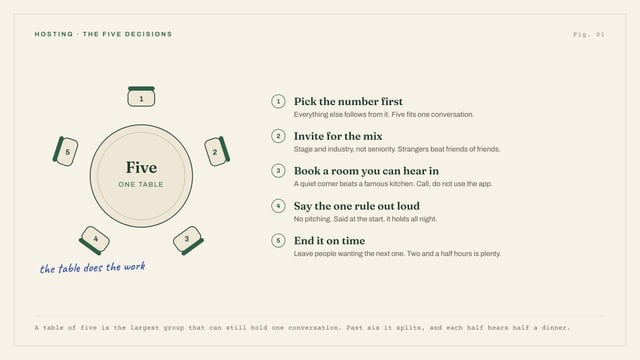
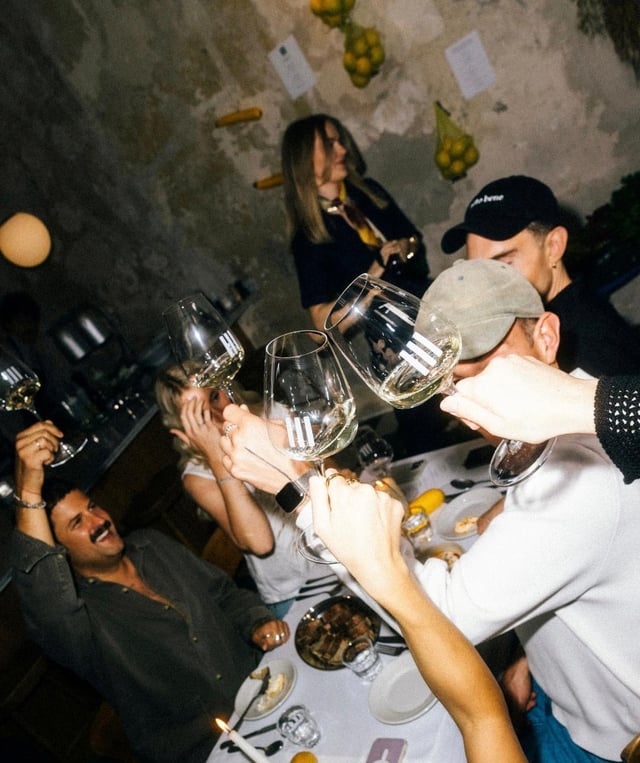
Founder dinners and curated communities. Small-table dinners (5-8 people, vetted) produce more cofounder intros per hour than any other format. The reason is structural: you're stuck with the same people for three hours, no escape, no phone. By dessert, you know who you'd build with.
University alumni circles. UBC Sauder, Rotman, Ivey, and Waterloo all have active founder communities in their respective cities. If you went to any of them, you have warm intros sitting on the table.
Industry-specific Slack and Discord groups. Toronto Tech, BC Tech, Lazy VC, and operator-specific groups (Product Manager HQ, RevGenius Canada) are where people post "I'm starting something, anyone want to grab coffee?" These get responses. LinkedIn doesn't.
For more on building the right network before you need it, see our guide on how to network as a founder.
Where to physically be in each city
Geography matters more than people admit. The best cofounder relationships compound through repeated, unplanned encounters. That means living or working near where founders cluster.
In Vancouver, that's Gastown, Mount Pleasant, and parts of Kitsilano. Gastown has the highest density of seed-stage offices in the city, and the coffee shops between Cambie and Carrall on any weekday morning are full of founders. Our breakdowns of the Gastown founder scene and Mount Pleasant startup dining cover the specific spots. For events, the Vancouver startup events 2026 list has the recurring ones worth attending.
In Toronto, it's King West, Liberty Village, and the stretch around MaRS. Demo days at MaRS and OneEleven still pull crowds. The Toronto building guide gets into which neighborhoods skew which way.
In Kelowna and the broader Okanagan, the scene is small enough that hitting Accelerate Okanagan events and a few weekly meetups puts you in front of basically everyone. That's an advantage. You can know the entire local founder population in 60 days.
If you're choosing between cities entirely, our best province for Canadian founders breakdown compares ecosystems by stage and sector. Founder Feast runs curated dinners in Vancouver, San Francisco and Los Angeles for exactly this reason: forced proximity with four other founders for three hours, no pitching, every other Thursday at 7pm.
The 12 vetting questions before you commit
Once you have a potential cofounder, the real work starts. Most failed cofounder relationships break on things that could've been surfaced in two long conversations. Ask these before you incorporate anything.
- What's your financial runway? How long can you go without salary?
- Are you full-time on this from day one, or transitioning?
- What does success look like to you in five years - $10M outcome, $100M, or unicorn-or-bust?
- What's the smallest exit you'd accept?
- Have you raised money before? From whom, and how did it end?
- What's a real example of a time you and a partner disagreed at work? How did it resolve?
- What are you actually bad at, and what do you outsource?
- Who else have you considered as a cofounder, and why didn't it work?
- What's your relationship with your last cofounder or business partner like today?
- Do you want to be CEO? If we both do, how do we decide?
- What's your spouse or partner's view on you doing this?
- If we hit a wall in 18 months and need to pivot completely, what's your stance?
You're not looking for "right" answers. You're looking for alignment, honesty, and someone who's thought about it. The red flag is vagueness. If they can't answer these, they haven't been through enough operating reality yet.
Equity splits that don't blow up
The default founder instinct is 50/50. The Slicing Pie and Founder's Pie frameworks both push back on this, and they're mostly right. Equal splits feel fair on day one and feel insane by month 18, when one person is shipping product and the other is "still thinking about messaging."
Three frameworks worth knowing:
The Y Combinator default: near-equal with vesting. Most YC companies end up at 50/50 or 55/45 with four-year vesting and a one-year cliff. The logic is simple: if you can't agree to split close to evenly, the relationship probably won't survive the harder calls later.
The Slicing Pie model. Equity is allocated dynamically based on contributions (time, cash, IP, relationships) until the company is funded. It's mathematically fairer but operationally complex. Use it if one cofounder is part-time for a defined period.
The weighted-factors approach. Score each cofounder on idea origin, domain expertise, time commitment, cash invested, and risk taken. Assign weights. Calculate the split. This is what Foundrs.com and similar calculators do. It produces uncomfortable numbers, which is the point.
Whatever you pick, three non-negotiables: four-year vesting, one-year cliff, and a written cofounder agreement before any product gets built. If you're going to do a Delaware flip later or raise pre-seed in Canada, investors will ask for clean cap tables. Don't make this harder than it needs to be.
The Founder Feast angle
The reason we built Founder Feast is that we kept watching potential cofounders meet at events, exchange cards, and never follow up. The format was broken. Big rooms, loud music, 90-second conversations, business cards in a drawer.
Our version: 5 founders, one restaurant, Thursday at 7pm, no pitching at the table. Three hours of actual conversation with people we've already vetted as serious operators. Membership is $39.99 CAD a month and covers every dinner you book; you pay the restaurant for your meal. We don't promise you'll find your cofounder there. We promise you'll meet four founders worth knowing, and that's how the actual matches happen, over weeks and months of bumping into the same quality of people. If you want in, apply here.