A Series A founder in Kitsilano told me last month she hadn't had a real conversation about her company in six weeks. Not with her cofounder, not her investors, not her partner. Six weeks of nodding along in standups and pretending the runway math wasn't keeping her up at 4am.
She's not an outlier. She's the median.
Founder loneliness in Canada is a specific kind of quiet. Smaller ecosystems, fewer peers at your stage, a cultural allergy to complaining, and a network that mostly lives on LinkedIn. The result: Canadian founders isolate faster than their American counterparts, and it shows up in worse decisions, slower fundraises, and a lot of quietly-shuttered companies that nobody writes obituaries for.
Why founder loneliness Canada looks different than the US
In San Francisco, you can walk into any coffee shop in SoMa and find three people building something. Loneliness there is a choice. In Canada, it's often the default.
The math is brutal. Vancouver has maybe 400 to 600 venture-backed startups actively operating. Toronto is larger but spread across a metro of 6.7 million. Kelowna's tech scene is real but tight. If you're a Series A SaaS founder in Vancouver working on developer tools, there might be four other people in your exact situation, and two of them are your competitors.
Add the Canadian cultural layer. We don't talk about struggle the way American founders do. There's no equivalent of the "failed my Series B, here's what I learned" LinkedIn essay economy. Vulnerability reads as weakness in a country where politeness often replaces honesty. So founders sit on problems until the problems metastasize.
This is one reason the Canada vs US startup comparison is more than just capital and tax. The social infrastructure is thinner, and thin social infrastructure kills companies quietly.
The specific isolation patterns I keep seeing
After running dinners for a few hundred Canadian founders, the same patterns repeat.
The Slack Ghost. You joined three founder Slacks in 2023. You lurk. You've never posted. You tell yourself you'll "engage more" but the threads move too fast and you don't want to look dumb in front of people whose companies raised more than yours.
The Coffee Chat Loop. You do 4 coffees a week. All of them are "quick catch-ups" with acquaintances or intro requests from LinkedIn. None of them go deeper than surface. You walk away caffeinated and lonelier.
The Cofounder Silence. You and your cofounder used to talk about everything. Now you talk about tickets, hiring, and payroll. The last time you admitted you were scared was Q3 2024.
The Investor Performance. Every investor call is a performance of momentum. You've forgotten how to have a conversation about your company that isn't a pitch.
If any of those hit, you're normal. And you're also in trouble, because the founders who ship for a decade have all built specific structures to break these patterns.
The peer group that actually works
The single biggest predictor of a founder staying sane past year three is a small, closed peer group of 4 to 6 other founders at similar stages, meeting on a recurring cadence, with a no-pitching rule.
Not a mastermind. Not a mentor group. Peers. Same stage, different industries so there's no competitive tension, and a rule that what's said stays said.
The format that works: monthly, 2 hours, one person "in the hot seat" for 30 minutes at a time. Real problems. Real numbers. No performative optimism.
The reason this works is boring. Founders don't need more advice. They need a room where they can say "I'm burning $180K a month and I have nine months of runway and I don't know if the product is working" without their voice shaking. That kind of room lowers cortisol, which lets the prefrontal cortex actually function, which leads to better decisions on Monday morning.
If you don't have one, build one. Four founders. Text thread. First meeting this month. Our guide to how to network as a founder breaks down how to find these people if you're starting from zero.
Why therapy is the least talked-about founder tool
Roughly half the Canadian founders I've had dinner with in the last year are in therapy. Almost none of them talk about it publicly.
The good ones aren't in therapy because they're broken. They're in therapy because they're running a job where the emotional stakes are compounding daily and there's no HR department, no manager, no built-in reflection time. A good therapist is a paid, confidential, weekly forcing function to actually process what happened.
Cost in Canada: usually $150 to $220 a session, sometimes covered by extended health. That's less than most founders spend on Uber Eats in a week.
The specific therapy modalities that Canadian founders report helping most: CBT for anxiety loops, IFS for the "I'm a fraud" voice, and somatic work for the founders who've stopped sleeping. This isn't wellness content. This is operational maintenance.
City-specific loneliness (and city-specific fixes)
Loneliness looks different depending on where you're building.
Vancouver founders isolate through geography. The tech scene is spread across Gastown, Mount Pleasant, Kitsilano, and North Van, and if you don't have a reason to leave your neighborhood, you don't. The fix: pick two other neighborhoods and go there weekly. Our Gastown founders guide and Mount Pleasant startup dining roundup cover where people actually gather. If you want structured intros, Founder Feast Vancouver runs Thursday dinners for exactly this reason.
Toronto founders isolate through scale. There are so many events that FOMO becomes paralysis, and you end up going to nothing or going to the wrong things. The fix: cut your event calendar by 80%, keep only recurring small-group formats. Building a startup in Toronto covers which rooms are worth showing up to.
Kelowna founders isolate through absence. There simply aren't as many stage-matched peers, and the ones who exist are often already in a group. The fix: go deeper with fewer people, and travel to Vancouver monthly. Our Kelowna startup ecosystem breakdown maps who's building what.
The tactical stack that keeps Canadian founders sane
Here's the actual system I see working, stripped of self-help language.
- One peer group. 4-6 founders. Monthly. Closed. No pitching.
- One therapist. Weekly or biweekly. Somebody who's worked with founders before if possible.
- One recurring social dinner. Not networking. Actual meals with founders you like, no agenda. Once a month minimum.
- One deep friendship outside startups. Somebody who doesn't care about your MRR. This is the one most founders skip and regret.
- One physical thing. Run club, climbing gym, hockey league. Body moves, brain resets.
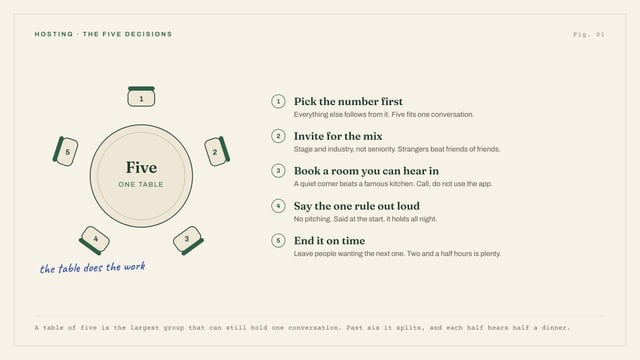
That's five recurring commitments. Total time cost: maybe 15 hours a month. Total impact on founder loneliness Canada: measurable within 60 days.
The founders who've been shipping for 8+ years all have some version of this. The ones who burn out at year 3 are missing three or four of these five.
What actually happens at a dinner (and why the format matters)
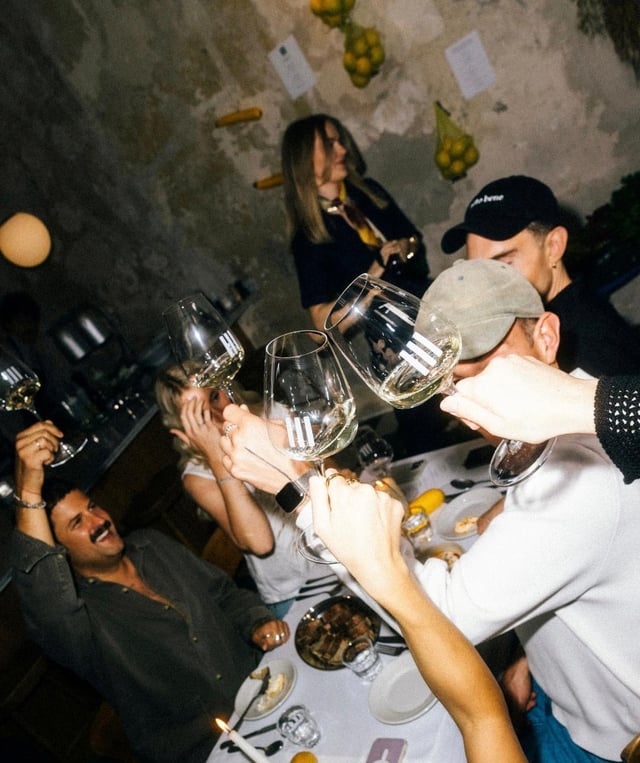
The reason we do dinners at Founder Feast is that structured meals do something coffee chats can't. Three hours at a table with 4 other founders, no pitching allowed, food that requires attention, and the natural rhythm of a shared meal, produces a different kind of conversation than a 30-minute standing meeting at a coffee shop.
By hour two, people stop performing. By dessert, someone's usually said the thing they've been holding in for a month. That's the whole point.
If you're in Vancouver, San Francisco or Los Angeles and you want to skip the awkward part of finding a peer group from scratch, apply here. Membership is $39.99 a month and covers every weekly dinner you book; you pay the restaurant for your meal. You'll sit with a handful of other founders, no pitching, and walk out with two contacts who actually matter. More on the format at founderfeast.com and how members describe it in is Founder Feast worth it.
Common questions
Is founder loneliness worse in Canada than the US? Yes, on a per-capita basis. Smaller ecosystems, thinner peer density, and a cultural reluctance to talk about struggle openly. The upside is that Canadian founder communities, when you find the right one, tend to be tighter and less transactional than their SF equivalents.
How do I find a peer group if I don't know any founders? Start with 2 you sort of know. Ask them to each bring 1. That's your group of 4. First meeting within 3 weeks or it won't happen. Our Founder Feast connections post covers the intro mechanics.
Do I need therapy specifically, or is coaching fine? Different tools. Coaching is for tactics and accountability. Therapy is for the underlying wiring. Most founders shipping long-term use both, or use therapy first and add coaching later.
What if I'm solo (no cofounder) and remote? You need this stack more, not less. Solo remote founders have the highest self-reported loneliness scores. Prioritize the peer group and the physical activity first.