The most valuable conversations at any founder dinner happen when someone on their second company starts talking. They've already made the expensive mistakes. They know exactly what they'd do differently. And they'll tell you, if you ask the right questions.
Listen to enough founders on their second company and a pattern shows up. Second time founders Canada-wide tend to sound remarkably similar when they describe their first company. They raised too much. Hired too late. Chased a market that felt exciting but never had the customers to support it. Then spent 18 months trying to fix what a smaller, sharper starting position would have prevented.
Here's what they wish they'd known.
Raise less, on purpose
The first time, you take the biggest cheque offered. The second time, you take the smallest cheque you can survive on.
The familiar arc goes like this. A big seed round the first time, a fast hiring spree, three products built in parallel, and a shutdown when growth stalls and the runway runs out. The second time: a small SAFE, a handful of employees, one product, and a path to profitability that doesn't depend on the next round.
The math is simple. More money means more pressure to grow into a valuation, which means faster hiring, which means less thinking. Second time founders raise what they need to hit the next milestone, not what they can get. They know the Delaware flip conversation can wait until there's a real reason for it. They know Canadian founders don't need to import US investors to build a serious business.
Less capital forces sharper decisions. Every hire has to earn out. Every feature has to ship. Every customer has to close. That constraint is a feature, not a bug.
Hire earlier, but hire different
This one sounds contradictory. It isn't.
First time founders either hire too late (trying to do everything themselves for 18 months) or hire too early with the wrong profile (three senior VPs before there's anything to run). Second time founders hire early, but they hire operators, not executives.
The common lesson: your first three hires should be people who ship. Not people who manage people who ship. A staff engineer who codes. A designer who designs. A generalist who does customer support Monday, sales calls Tuesday, and QA Wednesday. Titles come later. Output comes now.
Sales is the classic example. Hire a VP of Sales in month four and you often get a team, a CRM instance and a playbook before you get repeatable deals. Plenty of second time founders do sales themselves until the motion is proven, then hire one AE to run it.
If you're building your first team now, read our breakdown of the first 10 hires at a Canadian startup before you post a single job.
Pick a market with obvious customers
The single biggest killer of first companies isn't product or team. It's market.
Second time founders pick markets where they can name the first 50 customers before they write a line of code. Not "SMBs in North America." Not "developers." Specific. "Independent physiotherapy clinics in BC with 3 to 8 practitioners." "Series A logistics startups using NetSuite." "Restaurants in Gastown with a full liquor licence."
If you can't list 50 real names, the market is too vague. And if the market is too vague, your positioning will be vague, your sales cycle will be vague, and your revenue will be vague.
The contrast is easy to picture. A horizontal analytics tool for everyone struggles to find its first buyer. A product that sells one specific workflow to one specific role at one specific stage of company knows exactly who to call on day one. Smaller markets like the Kelowna startup ecosystem reward this kind of focus, because you can't fake distribution in a smaller market.
Stop pretending you're a US company
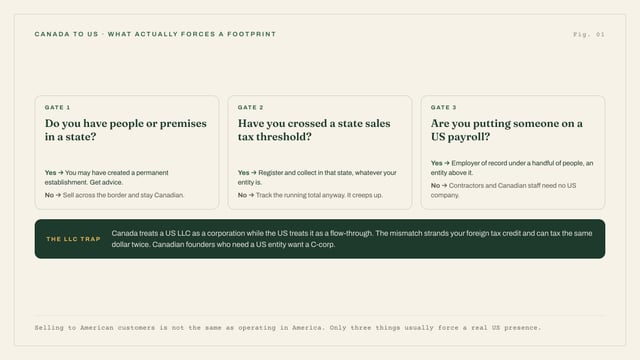
Canadian founders spend an enormous amount of energy pretending to be American. Delaware C-corp on day one. San Francisco phone number. LinkedIn location set to "New York." Second time founders stop doing this.
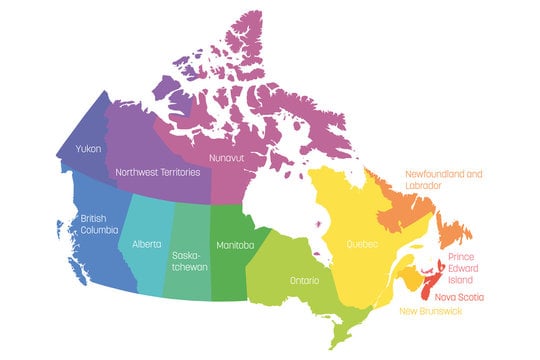
The reality: SR&ED alone can add 6 to 12 months of runway. IRAP grants are real money. Canadian customers close faster because they trust Canadian vendors on data residency and procurement. The BC startup ecosystem has produced enough exits now that the "you need to move to SF" advice is 10 years out of date.
Second time founders incorporate in Canada, take the tax credits, and sell to whoever will pay. If they need US investors, they'll deal with the flip when the term sheet arrives. Not before. Our guide on incorporating a Canadian startup in 2026 covers what actually matters.
The exception: if your customer base is 90% US enterprise from day one, incorporate US. Otherwise, stop pre-optimizing for a problem you don't have.
Kill things faster
First time founders keep bad projects alive because killing them feels like admitting failure. Second time founders kill things every week.
The feature nobody uses. The channel that isn't converting. The hire that isn't working. The customer segment that keeps churning. First time, you'd spend six months trying to fix each of these. Second time, you give it 30 days, then cut.
One practical version is a weekly kill list: every Friday, name what isn't working and cut it. Teams often resist the habit at first, then start bringing things to the list themselves, because a company that dies from a hundred papercuts is a common first-company story.
This applies to co-founder relationships too. If you're pre-launch and already fighting, that's the signal. The cofounder search matters more than the idea, and second time founders vet co-founders like they're hiring a CEO, because they are.
Build a real network before you need it
The lesson second time founders repeat most often: they built their network too late the first time.
They didn't know other founders when things got hard. They didn't have anyone to call at 11pm about a bad board meeting. They didn't have peers to compare hiring benchmarks with, or vet a term sheet with, or introduce them to their next customer. By the time they realized they needed a network, they were already 18 months into a company that was struggling, and everyone they met assumed they were fundraising.
Second time founders start building relationships in month one. Not for deal flow. For sanity. Founder loneliness is real and it compounds, and the founders who survive it are the ones with three or four other founders they can text without a preamble.
This is why intentional dinners work better than 200-person mixers. Five people, one long dinner, no pitching. You leave with two relationships that will still exist in five years. Compare that to a networking event where you collect 15 cards and remember nobody.
Common questions
How much should a second time founder raise for pre-seed? Enough to run 18 months at a burn that lets you learn. For most Canadian software companies, that's $500K to $1.5M with a team of 3 to 5. Anything more and you're buying pressure you don't need yet.
Should second time founders take on a co-founder if they solo-founded the first company? Depends on why the first one failed. If you burned out from doing everything alone, yes. If you had co-founder friction that killed momentum, maybe not. A common shape for a second company is a 2-person team with clearly divided domains.
Is Toronto or Vancouver better for a second company? Toronto if you're going enterprise or fintech. Vancouver if you're going product-led or consumer. Neither is objectively better. Read our take on the best province for Canadian founders for the full breakdown.
What's the biggest mistake second time founders still make? Assuming the second market will behave like the first one. Different customers, different sales cycles, different everything. The lessons transfer. The playbook doesn't.
Where second time founders actually spend their time
If you talk to enough founders on their second or third company, you'll notice they've stopped attending big events. They don't do panels. They don't do Demo Days unless they're presenting. They spend time with three or four other founders in similar stages, comparing notes on real problems.
That's the format we built Founder Feast around. Five founders, a great restaurant, every other Thursday at 7pm. No pitching, no name tags, no MC with a microphone. Just the conversation second time founders wish they'd been having the whole time. We run dinners in Vancouver, San Francisco and Los Angeles. If you want in, apply for a seat.